Growth Gems experts

Robert Skrob

· LinkedIn

9 insights on Lifecycle Marketing, Monetization and Retention from 3 talks and podcasts, each with the quote and a link to the moment it was said.

Is this you? Suggest an edit

Lifecycle Marketing

Lifecycle Marketing

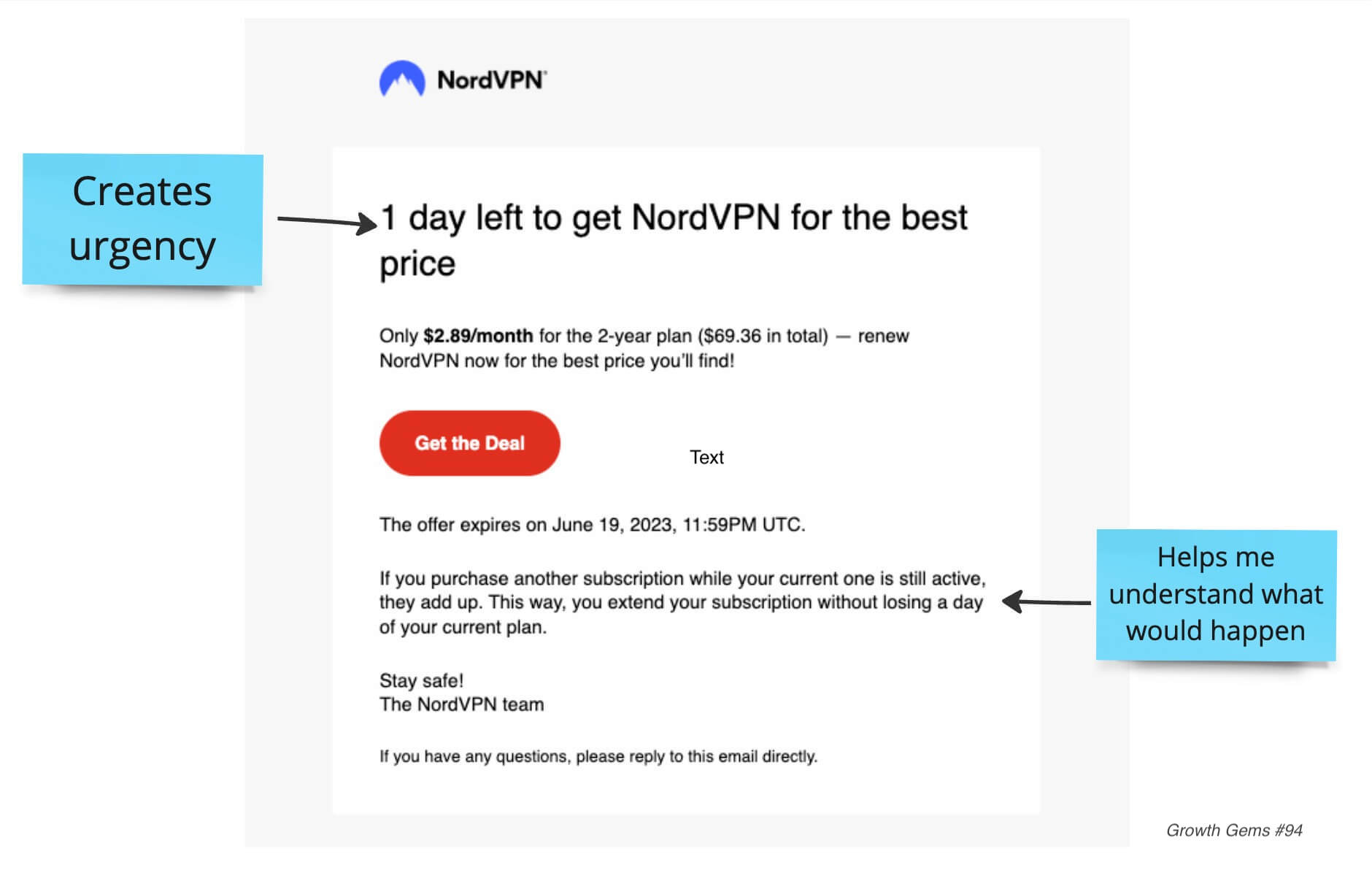
Renewal emails should be very different from promo emails. A year later, the relationship is very different, so your story must be different. Analogy: first date vs. first wedding anniversary.

5 Ways to Improve Annual Subscription Renewals. at 7:55 · Featured in Growth Gems #94

Sylvain's take:
—

⛏️ Going Deeper: I rarely see it just after a few weeks, like what is mentioned above, but here is an example from NordVPN with an early offer to switch to a longer plan.

Lifecycle Marketing

Customers’ choice to renew is always about what’s coming up in the future, not the past:

  • Talk about features/developments coming up in the following months or year
  • Gift something along with the renewal

5 Ways to Improve Annual Subscription Renewals. at 11:02 · Featured in Growth Gems #94

Sylvain's take:

—

My 2 cents:  I love the gift idea. I haven’t seen anybody use that yet, though…Hit me up if you have examples!

Lifecycle Marketing

Don’t let Stripe write your renewal emails. Renewal emails are not just about compliance; you need to optimize them for your customers.

5 Ways to Improve Annual Subscription Renewals. at 7:25 · Featured in Growth Gems #94

Sylvain's take:

—

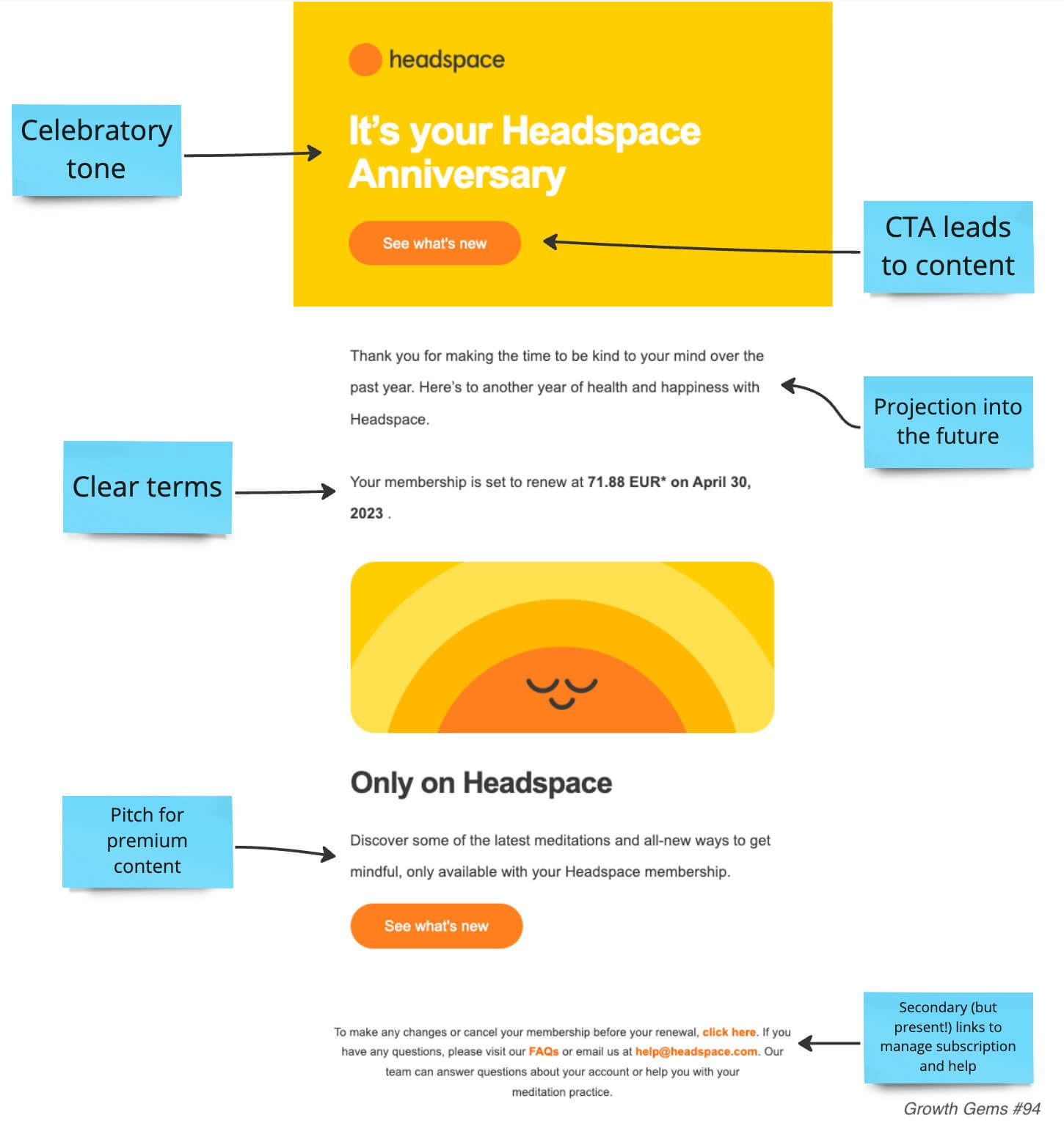
⛏️ Going Deeper: while you can’t rewrite emails from Apple and Google, you should send your own in addition to the app stores’ communications (and make sure they arrive before).

Here is a renewal email from Headspace, with a few highlights (it follows some of the recommendations you’ll find further below):

Lifecycle Marketing

Template for your 7-day new subscriber welcome emails sequence:

  1. Day 1 - trust: it’s time to deliver what you initially promised in your initial offer. Use the list of key benefits from the product page, and include direct links to each of the items that you promised.

  2. Day 2 - team: get users excited about the people that create and deliver your program to your subscribers.

  3. Day 3 - main objection: find what is the #1 reason your subscribers quit (e.g. time, money, etc.), and make it the main reason they should keep the subscription.

  4. Day 4 - beliefs: preconceived beliefs often prevent subscribers from becoming successful with what you deliver. This email focuses on presenting 3-5 of the most common myths or mistaken ideas so you can correct their thinking.

  5. Day 5 - win: think about what’s the single fastest way to experience a victory with what you deliver. Get your subscribers a quick win so they can feel good about your program.

  6. Day 6 - simplicity: many subscribers don’t believe they have what it takes to be successful with your product. Make success look attainable, with the quick win from Day 5 being the first step of the journey.

  7. Day 7 - proof: this is the time to introduce your new subscribers to your most successful subscribers.

🖥️ 7 Days of Onboarding Emails to Increase Retention at 6:52 · Featured in Growth Gems #72

Sylvain's take:

Monetization

Monetization

Having multiple ways to monetize the same subscriber is the key to scaling subscription businesses. Smart subscription businesses create systems that monetize new subscribers and unconverted leads to get more revenue and ROI from their marketing efforts.

5 Keys to Customer Loyalty During a Recession · Featured in Growth Gems #100

Retention

Retention

Don’t let your customers be surprised by a renewal. Communicate clearly about the upcoming charge. It’s the right thing to do for customers and prevents you from getting penalized by Visa or Mastercard.

5 Ways to Improve Annual Subscription Renewals. at 4:54 · Featured in Growth Gems #94

Sylvain's take:

—

⛏️ Going Deeper: if you sell subscriptions on the web, you’re most likely already familiar with chargebacks.

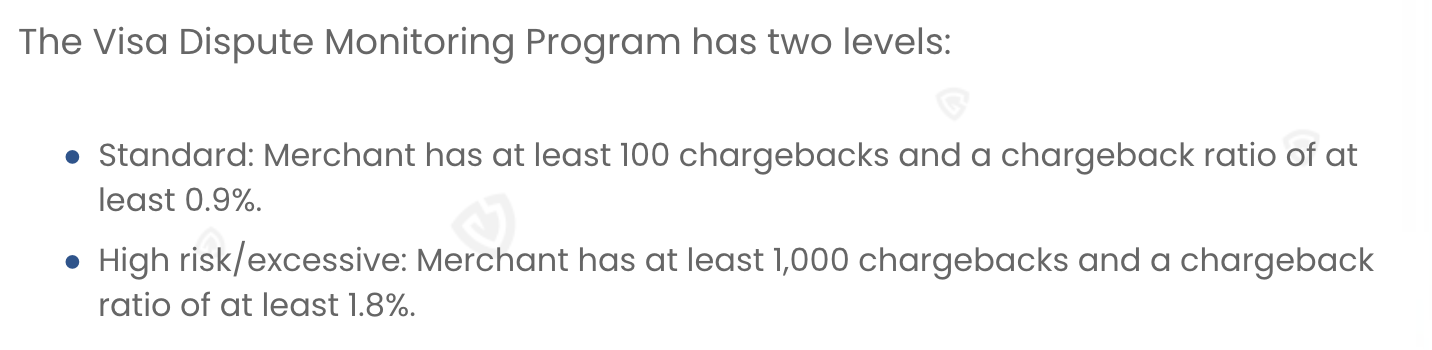
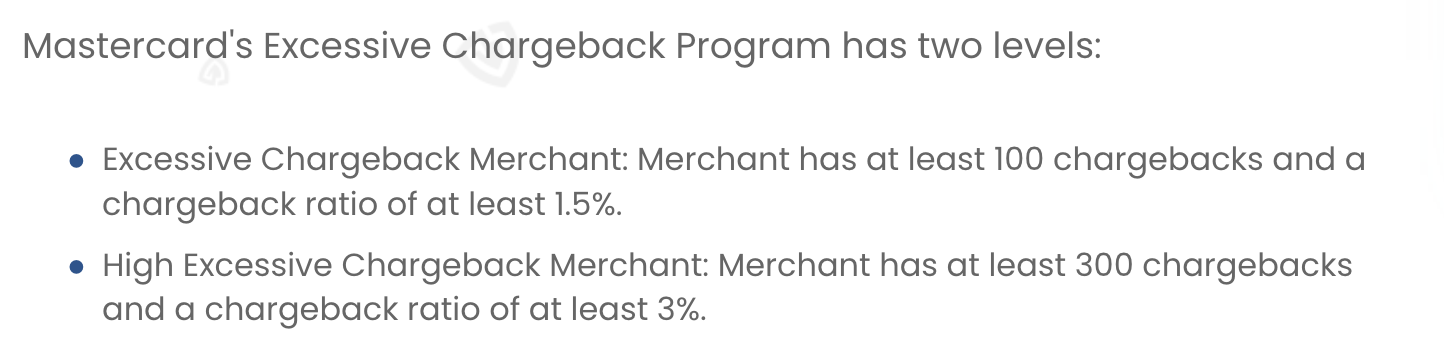
Beyond the fact that chargebacks mean lost revenue, you absolutely need to avoid going past the chargeback ratio: the number of chargebacks a merchant receives divided by the number of total transactions.

Source: Chargeback Gurus

There are financial penalties for each chargeback/dispute when you pass the first ratio, and things only get worse from there.

Not surprising customers is prevention, and you can also:

  • Make it easy to contact your support

  • Have a flexible refund policy or a money-back guarantee

  • Challenge disputes/chargebacks (e.g., via Stripe or Adyen) if you have evidence there is abuse or fraud