Monetization
KPIs for your pricing test:
- Primary KPI: revenue per allocated user
- Secondary KPIs: revenue, month 1 churn, plan mix, conversion rates.
- Guardrails: lots!
Maximizing LTV with Annual Plans: Pricing, Tactics & Strategies at 23:10 · Featured in Growth Gems #112
Sylvain's take: Dan chooses Revenue per allocated user as the primary KPI because that’s what allows him to be the most confident in what monetizes the most effectively.
Monetization
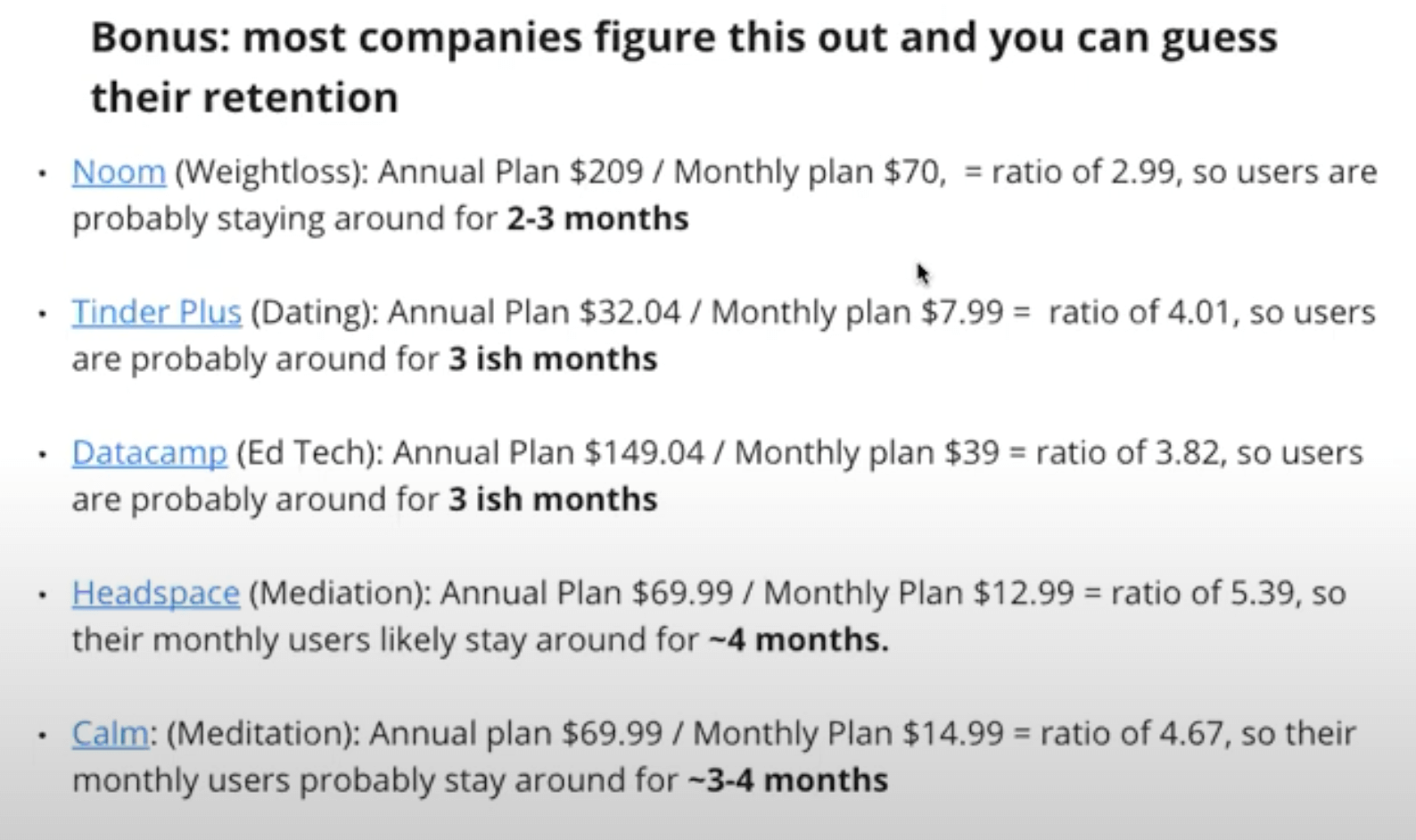
Most products with under 12 months' retention heavily discount their annual plan. Eventually, everybody deploys this tactic of pricing annual plans to be 1 to 2 months more than usage retention.
Maximizing LTV with Annual Plans: Pricing, Tactics & Strategies at 8:15 · Featured in Growth Gems #112
Sylvain's take: Remember that customers who plan to stick around are likely to choose the yearly plan, so basing it on monthly subscription retention already comes with a bias. While interesting, it’s highly simplified:
Monetization
Payment fail rates are a hidden cost of churn that most companies don’t monitor. Don’t accept them; try to solve this!
Maximizing LTV with Annual Plans: Pricing, Tactics & Strategies at 16:45 · Featured in Growth Gems #112
Sylvain's take: Subscriptions through the app stores will most likely have lower payment rates, but Dan mentioned that the best companies at handling this are the ones that focus only on payment failure rates.
Monetization
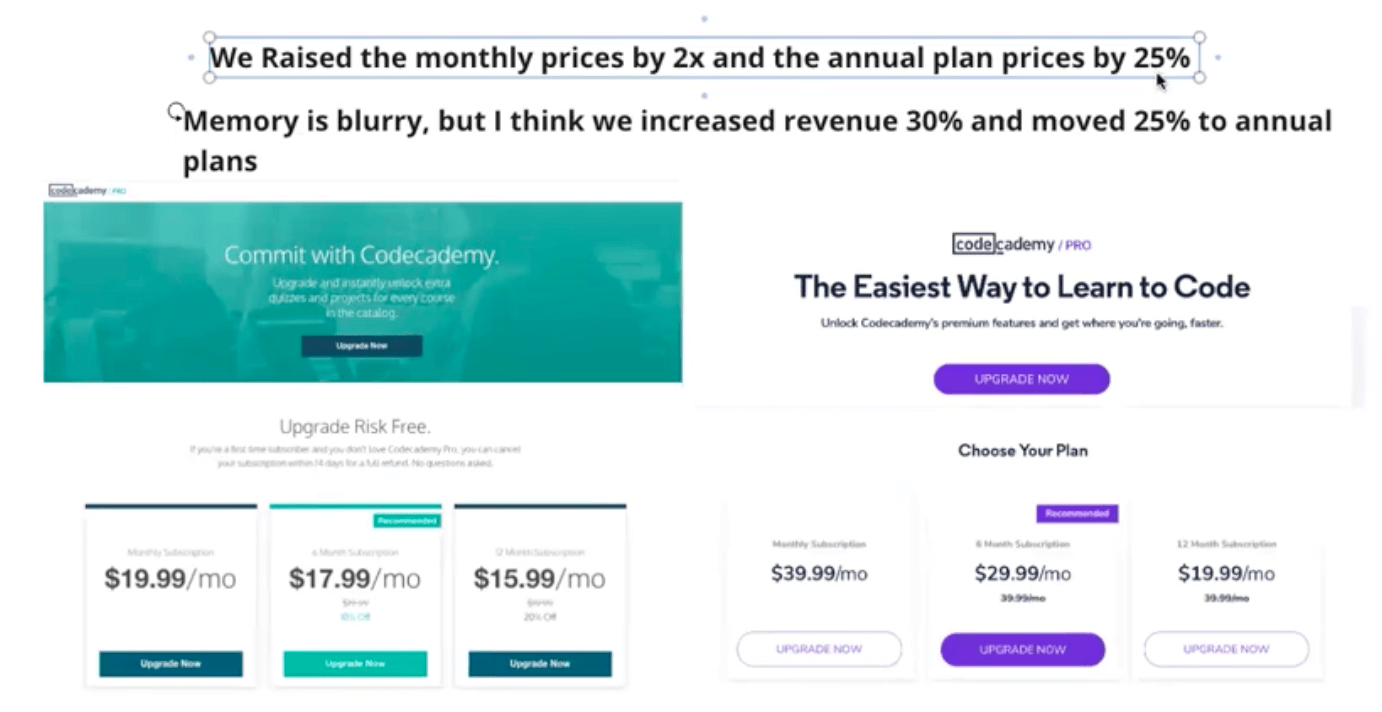
If you haven’t raised your annual prices in a while, a great tactic is to increase your monthly plan instead of decreasing the annual plan.
Maximizing LTV with Annual Plans: Pricing, Tactics & Strategies at 19:55 · Featured in Growth Gems #112
Sylvain's take: You should still run an a/b test, but it’s most likely to work!
Monetization
The most common cause of death for subscription companies is overspending on acquisition. When you launch a new channel, do not assume that the LTV of those users will be similar.
Maximizing LTV with Annual Plans: Pricing, Tactics & Strategies at 12:40 · Featured in Growth Gems #112
Sylvain's take: This is why companies that rely heavily on ads sell only annual plans to circumvent this problem. Masterclass is one example, but there are many.
Of course, this doesn’t solve the renewal part; it’s a mitigation technique.
Monetization
You can try to upgrade monthly users to a yearly plan, but it’s more effective to use every trick in the book (calling out best value or savings, highlighting, etc.) to convert users on the higher plan to begin with.
Maximizing LTV with Annual Plans: Pricing, Tactics & Strategies at 33:15 · Featured in Growth Gems #112
Monetization
For users with legacy prices, let them know during cancellation that their price is no longer available. Some will stay with the product to keep the lower price. You can also have a “pause” feature to allow them to stay on.
Maximizing LTV with Annual Plans: Pricing, Tactics & Strategies at 28:20 · Featured in Growth Gems #112
Monetization
Annual plans can extend you past your product's “natural” retention. Most B2C apps solve a problem that lasts under 12 months, so figure out how long a user should stay on your product and discount your annual plan accordingly.
Maximizing LTV with Annual Plans: Pricing, Tactics & Strategies at 6:14 · Featured in Growth Gems #112
Monetization
When you’ve defined the price raise:
- Announce that it is happening in the future and why
- Run a “last call” marketing email campaign to get a bump in revenue
- Ship the new prices (be very cautious about raising prices on existing and dormant users)
- Communicate widely in the company and update prices in all locations (customer service template responses, FAQ pages, ad copy, etc.)
Maximizing LTV with Annual Plans: Pricing, Tactics & Strategies at 27:15 · Featured in Growth Gems #112
Sylvain's take: Dan recommends not displaying the price on the FAQ page but instead linking from the FAQ page to the price page so that it’s always accurate.
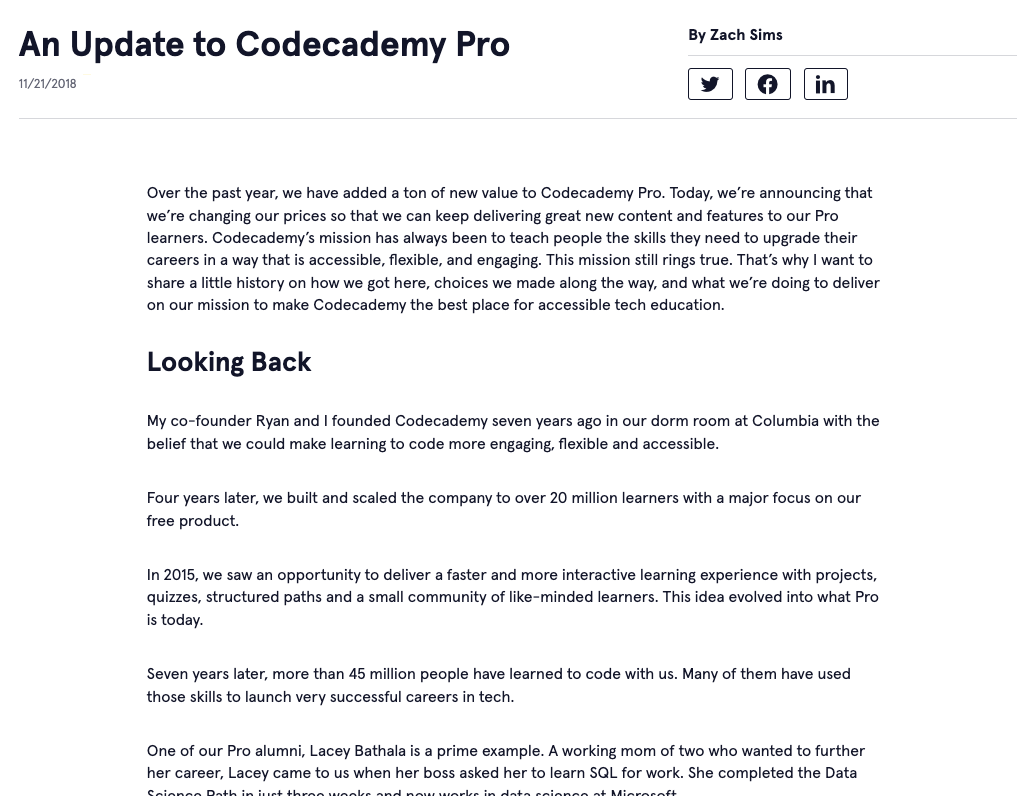
Example of an article to communicate price change
Monetization
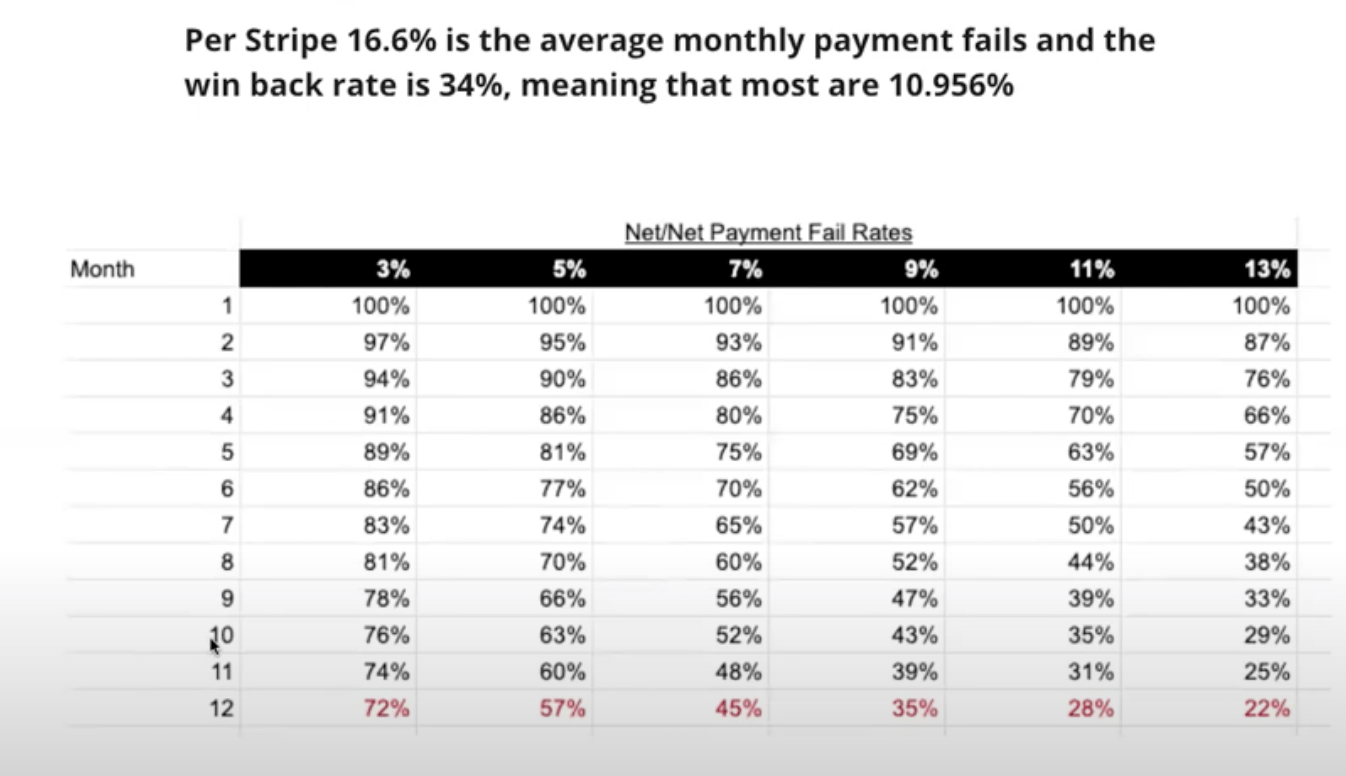
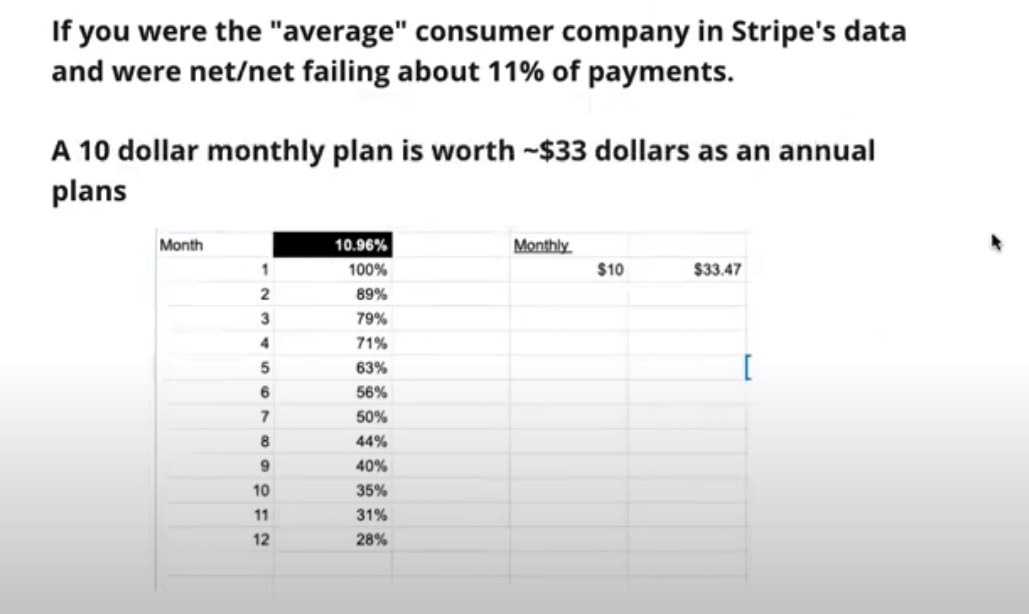
When you think about pricing yearly vs. monthly, consider how your payment processing works and factor in how much more discounting you can “afford” on the annual plan based on your payment failing rates.
Maximizing LTV with Annual Plans: Pricing, Tactics & Strategies at 15:40 · Featured in Growth Gems #112
Sylvain's take: The table below shows the impact of failure rates on monthly plans over time. If you look at the 11% column, you can see that over 12 months, 77% of users would churn due to payment failures! This decreases if you sell an annual plan from the get-go.
Monetization
The best retaining products do not offer annual plans. Instead, they provide different packages/tiers to drive up the LTV by attracting different users. Examples: Netflix, Spotify, AT&T, and Insurances.
Maximizing LTV with Annual Plans: Pricing, Tactics & Strategies at 7:38 · Featured in Growth Gems #112
Monetization
For shorter lifecycle products, annual plans are the subscription equivalent of AOV in eCommerce. It’s one of those things you want as high as possible and fixes/mitigates the issues you might get in many other areas:
- Enables higher acquisition costs
- Lowers churns
- Simplifies payment processing
- Activates better
Maximizing LTV with Annual Plans: Pricing, Tactics & Strategies at 1:08 · Featured in Growth Gems #112
Monetization
Knowing your LTV in the early stages of a company is hard because you’re constantly releasing new features, adding new channels, and changing prices, and it takes time for cohorts to mature. It’s a continually rolling problem. Annual plans solve that.
Maximizing LTV with Annual Plans: Pricing, Tactics & Strategies at 9:55 · Featured in Growth Gems #112