Creatives
Refresh fatiguing ads by keeping what works but slightly modifying them. Example: going from just a tweet to a tweet on a street pole, then turning it into a video. Sometimes the most effective creative iterations aren't the most obvious ones - they're the ones that surprise users enough to interrupt their scrolling behavior.
"This is a fun example that I like at Pockpock. This is again a real ad that worked for us. So it is a tweet that someone, a real tweet that someone posted about Pockpock that we thought expressed really well what is great about it. So we asked them to use it. It worked great. We were able to spend a lot of money on it, um, up until it started to fatigue a little bit. So, we had a brainstorm with the team and we were like, hey, how can we refresh this a little bit? And someone in the team was like, why don't we print it and stick it on a street bowl?"
How to 10X Your Creative Testing Without Losing Your Mind at 16:24 · Featured in Growth Gems #126
Creatives
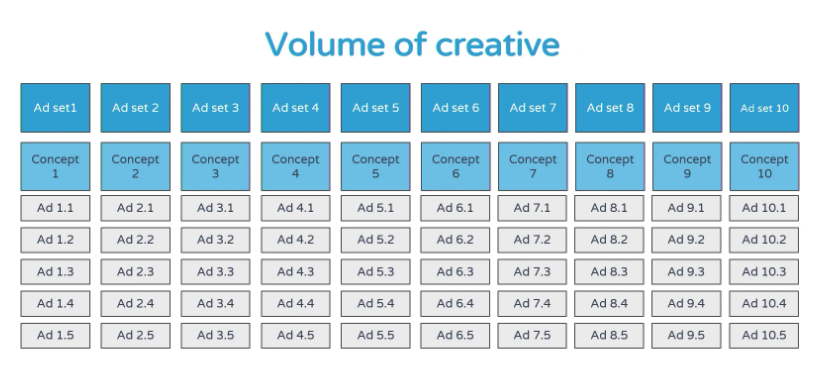
Run one new concept per ad set so you understand how the learning is structured.
How to 10X Your Creative Testing Without Losing Your Mind at 12:10 · Featured in Growth Gems #126
Sylvain's take: 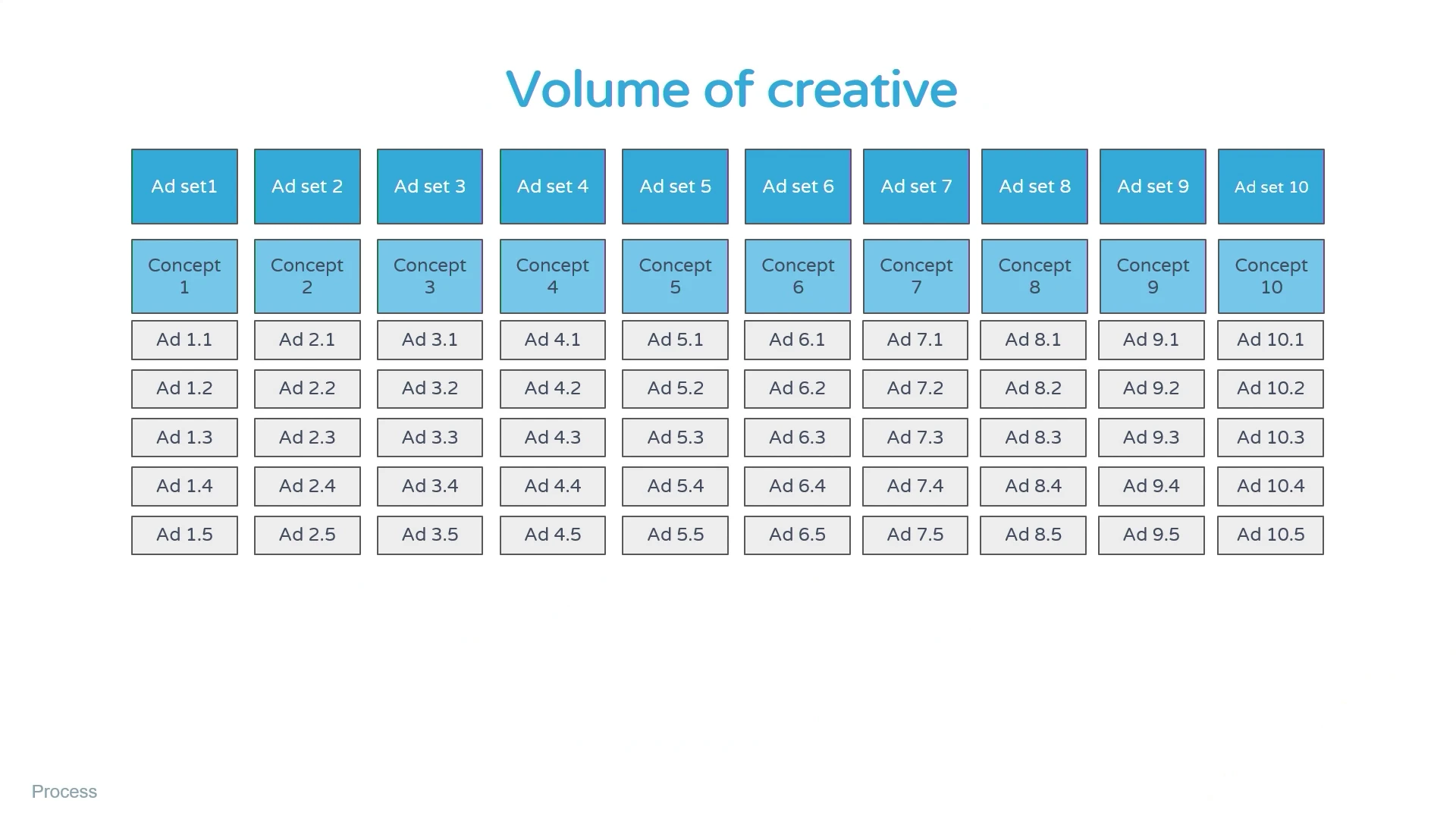
Creatives
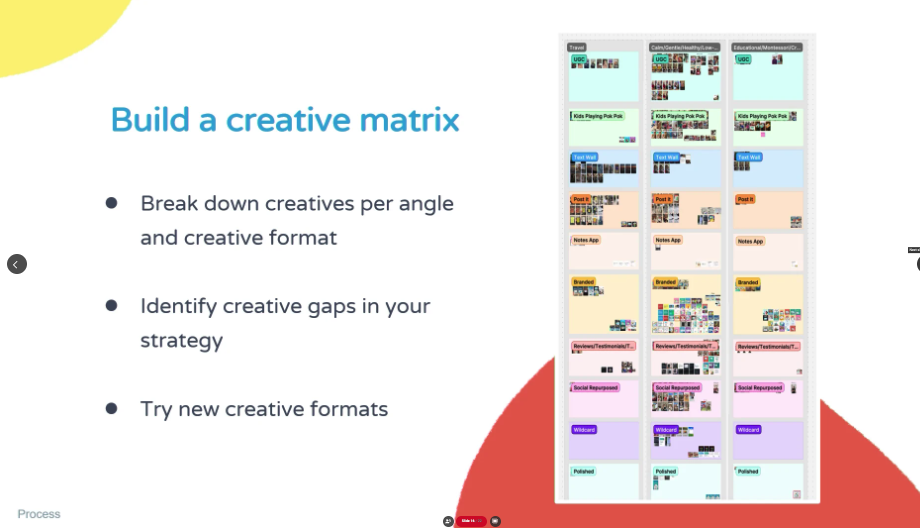
Create a creative matrix that breaks down ads by value proposition angles and creative formats to systematically identify testing opportunities. This framework helps you discover untapped combinations and ensures comprehensive coverage of your value propositions.
"Another way we structure creative when you have, like, hundreds, thousands of them is build a creative matrix. So this is a really great tool for that. Basically, we break our ads in two dimensions. The first one is the angle. The angle is pretty much your value proposition that your app is pushing. So for Pockpock, it's Pockpock as a travel tool because it's offline and it's calming for kids, or Pockpock as a non-addictive tool that parents can feel good about."
How to 10X Your Creative Testing Without Losing Your Mind at 12:55 · Featured in Growth Gems #126
Creatives
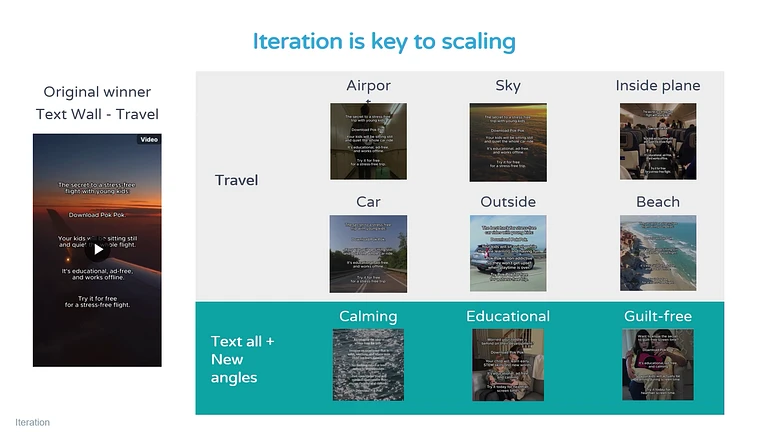
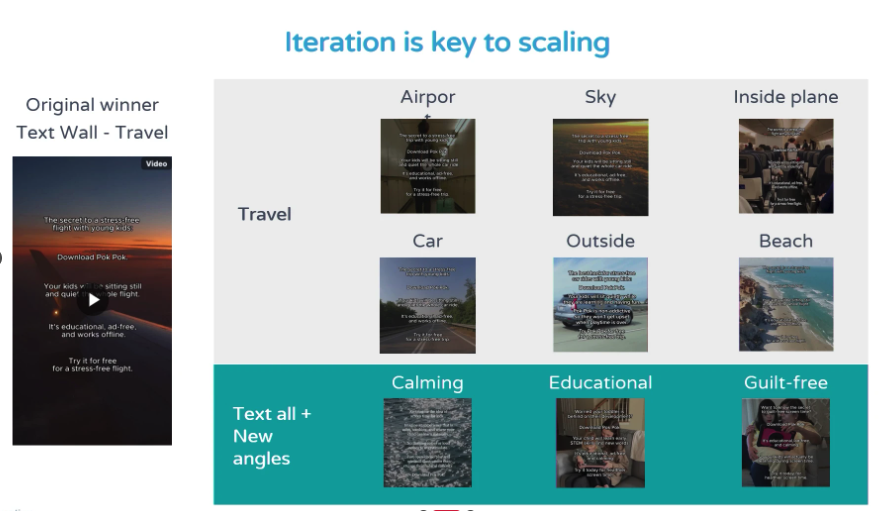
When you find a winning creative format, systematically apply it across different situational contexts relevant to your audience. This structured iteration approach can yield multiple winners that outperform the original, maximizing the value of your creative discoveries.
"This is a real ad that worked really well at Pakpock. It is, uh, the angle is travel, and the creative format is text wall. So, you see this long text on a reel, and the background is kind of like a suiting-uh, dusk flight. So, what we did, parents, let's keep that creative format and just apply it to different situation that a parent might encounter, and not only were we able to get similar result as the first one, but we beat it many times over."
How to 10X Your Creative Testing Without Losing Your Mind at 15:39 · Featured in Growth Gems #126
Sylvain's take: The examples he shared clearly illustrate that.
Creatives
Build a lean creative team that's 'creatively obsessed' - constantly analyzing winning ads, discussing failures, monitoring competitors, and tracking organic trends on social platforms. This obsession with creative performance creates a culture of continuous learning that drives breakthrough results.
"Um, I think what the most important thing is to have a lean team that's really optimized for speed and quality, and a team that is also what I call creatively obsessed. So you want people who are always discussing ads. What has won last week? What has won this week? What didn't work? Why didn't it work? Was the competitor testing? What is hot on Instagram these days? What what are the influencers doing? Because organic trends can be very, uh, a good source of inspiration for ads."
How to 10X Your Creative Testing Without Losing Your Mind at 6:35 · Featured in Growth Gems #126
Sylvain's take: Below is the team set up he recommends, along with some tools.
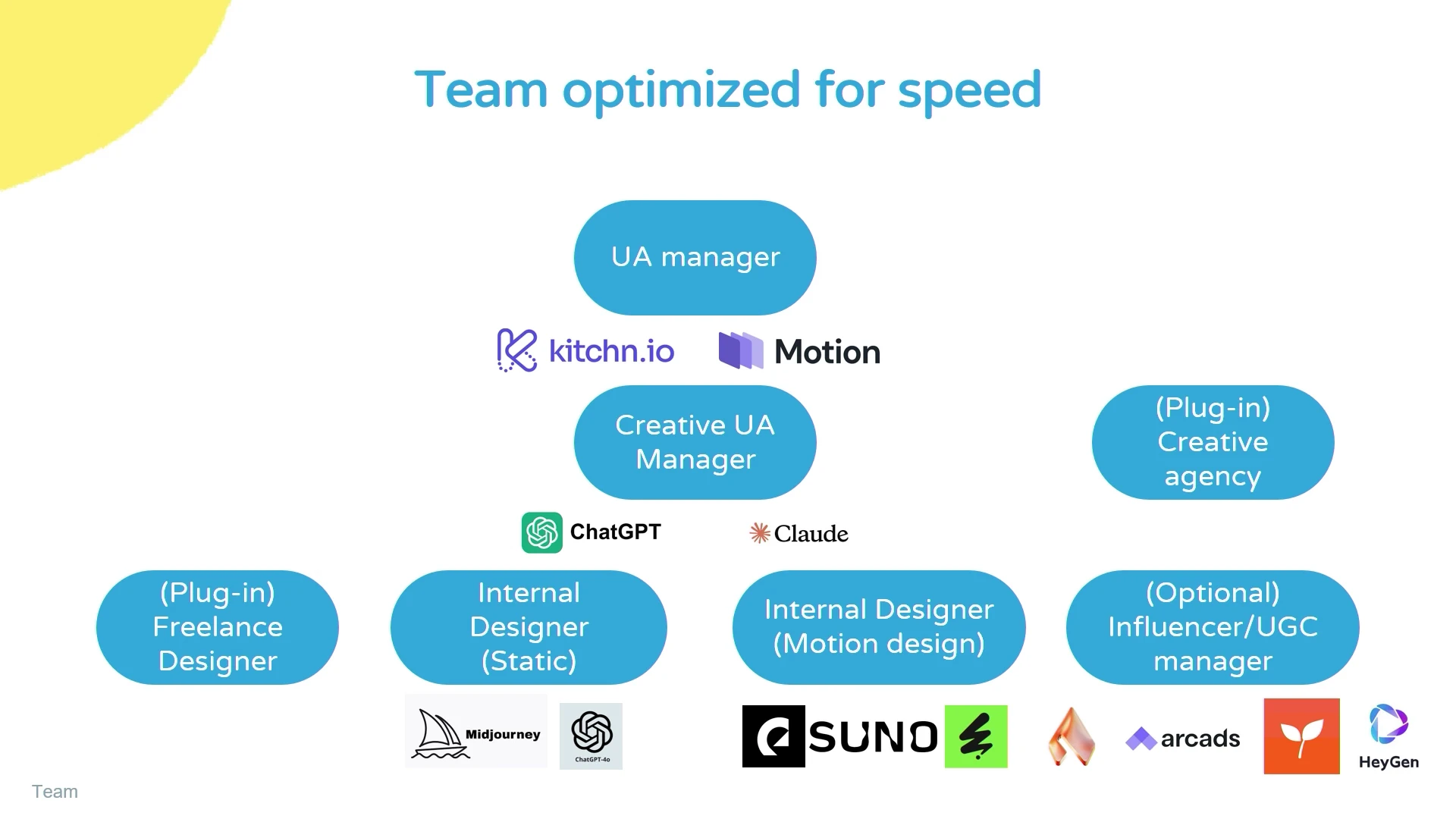
A good suggestion he made is to combine the influencer/affiliate management with the UGC relationship management to maximize efficiency. Finding high-quality user-generated content can be a game-changer for ad performance (UGC is not just ‘talking-heads’ btw), but it requires dedicated relationship management to source effectively.
Creatives
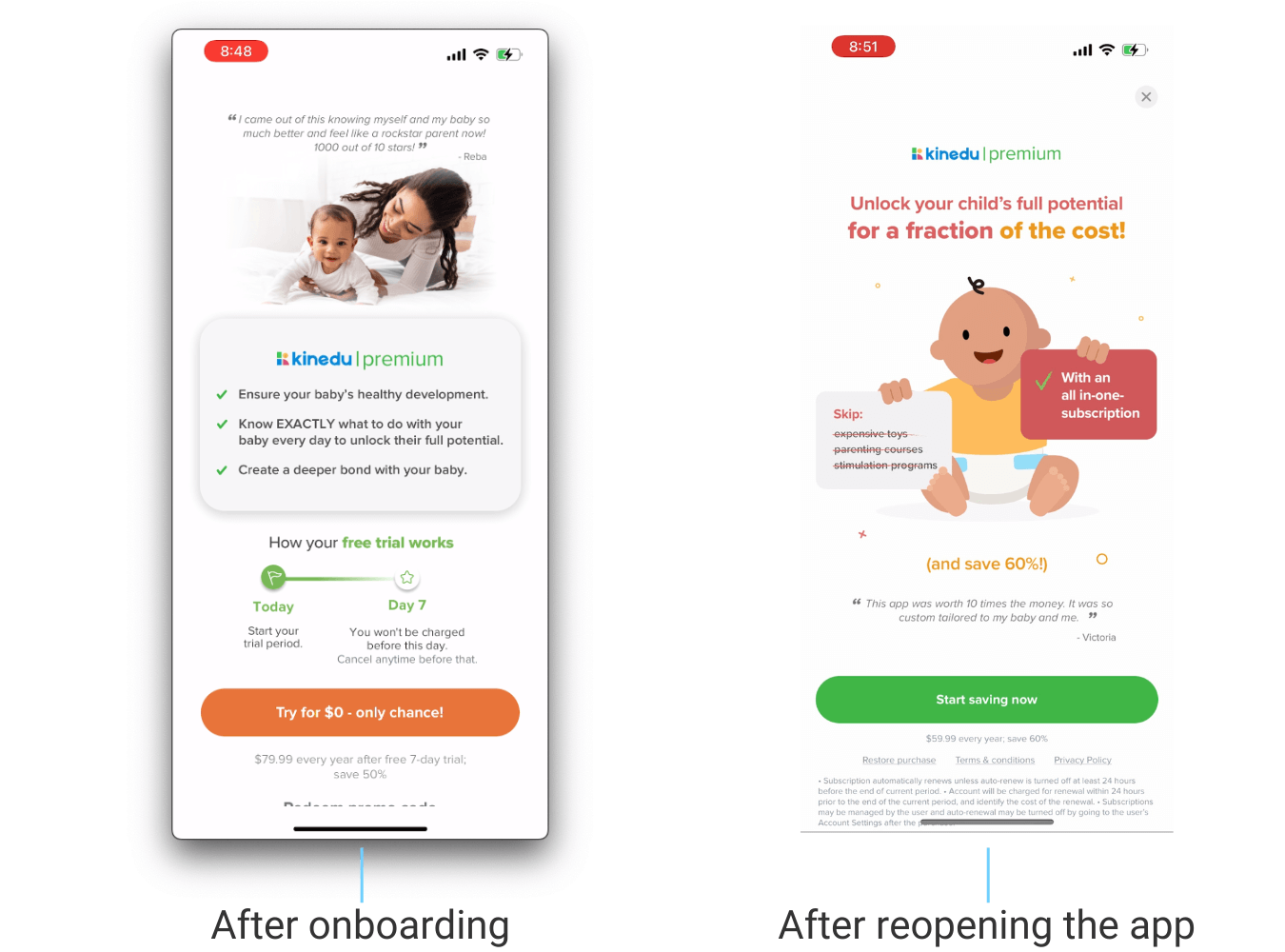
Apply winning ad copy directly to your product onboarding flow to create messaging consistency from acquisition to activation. This cross-functional application of creative insights can significantly improve conversion rates throughout the user journey.
"So, at Buckpock, when we had a really good ad with great copy, we took that copy, put it in the first page of the onboarding, and we saw that people in the company more on the product growth side could dig into."
How to 10X Your Creative Testing Without Losing Your Mind at 15:01 · Featured in Growth Gems #126
Sylvain's take: For example, you can put the copy directly on the first page of your product onboarding.
Applied to web-based funnels, you can leverage utms to adapt automatically the copy to your top winning creatives.
Creatives
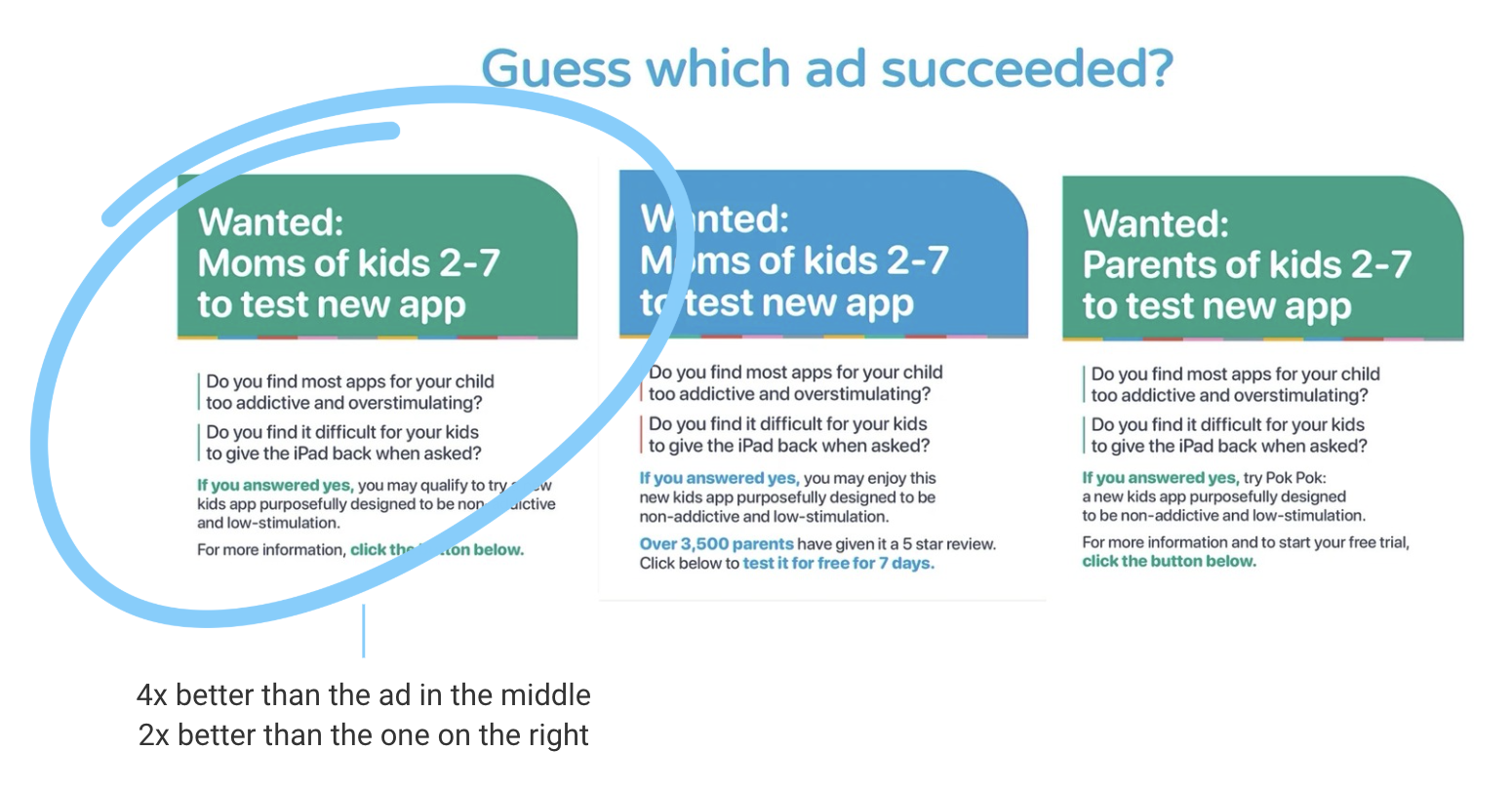
Minor creative variations can produce dramatic performance differences - up to 4x between similar-looking ads. This underscores why extensive testing of small changes is essential, as seemingly insignificant details can have outsized impacts on all major metrics.
"If you guess the one on the left, congratulations. You have an extremely keen eye. Um, so this one did the best for us and what I want to highlight is not only did it do the best for us, but it did twice as good at the blue one in all major metric, CPA, uh, click-through rate and the blue one did twice as good as the other green one. So between the two green one, you have a four-fold difference for really minute changes."
How to 10X Your Creative Testing Without Losing Your Mind at 5:24 · Featured in Growth Gems #126
Sylvain's take: He shared the example of the 3 ads below, with the one on the left doing 2x better than the middle one and 4x better than the one on the right.
Creatives
Leverage AI tools strategically across your creative production pipeline, with the biggest ROI at the design level. Don't overlook AI for music generation - tools like Suno and Envato can help create custom soundtracks that match your creative vision without licensing issues.
"From the creative UA manager level, chat GPT, Claude, brainstorming, um, copywriting and where I have found in my own experience it's the juiciest, it's really at the design level, uh, to produce more creative more quickly. So, Generative AI, Midjourney, Chat, GPT, um, music is often underlooked and there's really great products out there like Suno, Envato, Epidemic Sounds that can help you generate AI music that fit the vibe you want to get."
How to 10X Your Creative Testing Without Losing Your Mind at 9:31 · Featured in Growth Gems #126
Creatives
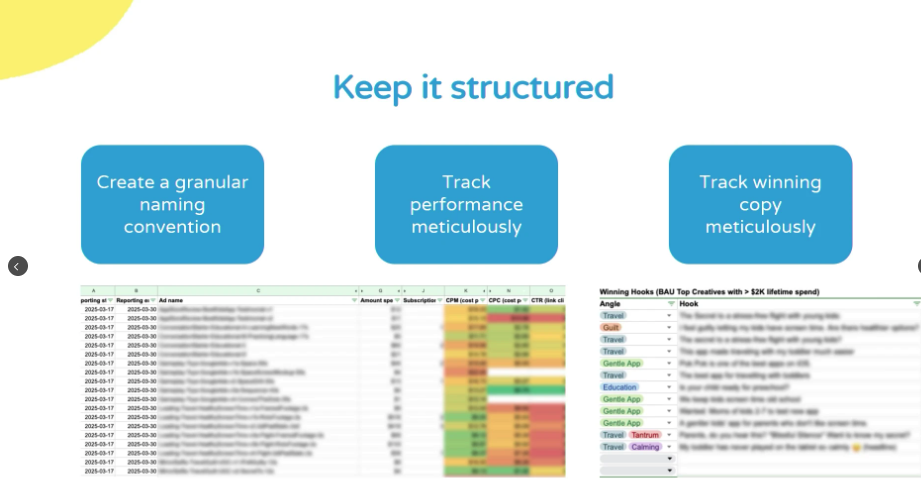
Maintain a library of winning ad copy that designers can access directly. It makes it easy for designers to dig into it and to create new creative without having to have a brief. It also allows to easily find and use it in other areas (e.g., onboarding copy).
"And my favorite one is tracking winning copy. This is something that is really important because copy is extremely powerful. So having that makes it easy for designers to dig into it and to create new creative without having to have a brief. Also, good copy works in ads, but it's also going to work across your whole business."
How to 10X Your Creative Testing Without Losing Your Mind at 14:42 · Featured in Growth Gems #126
Sylvain's take: Something else worth having: a ready-to-go brief/doc for agencies and freelancers that contains product/brand info, creative wins & learnings, user research (or input to user research like reviews and comments).
Creatives
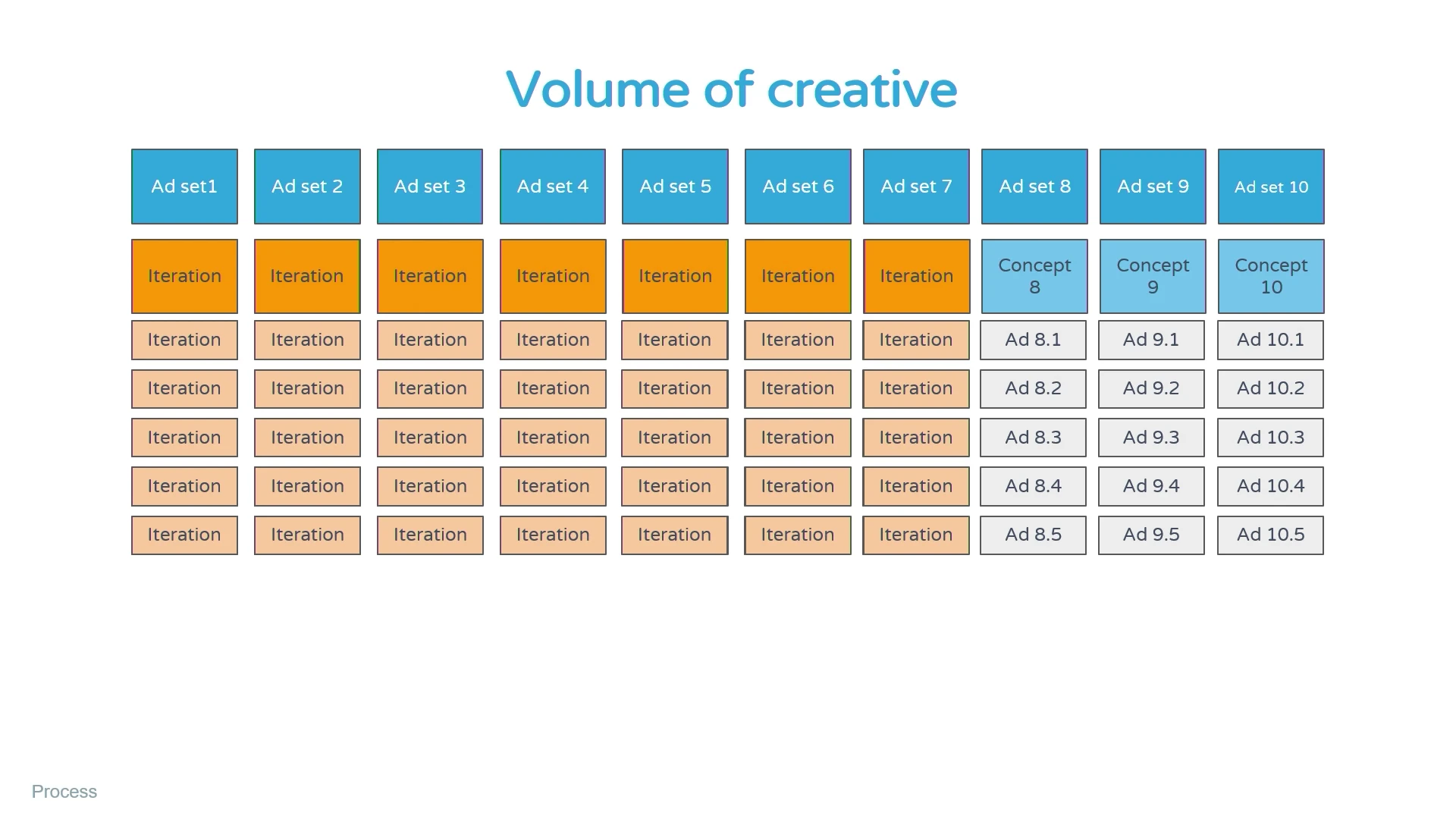
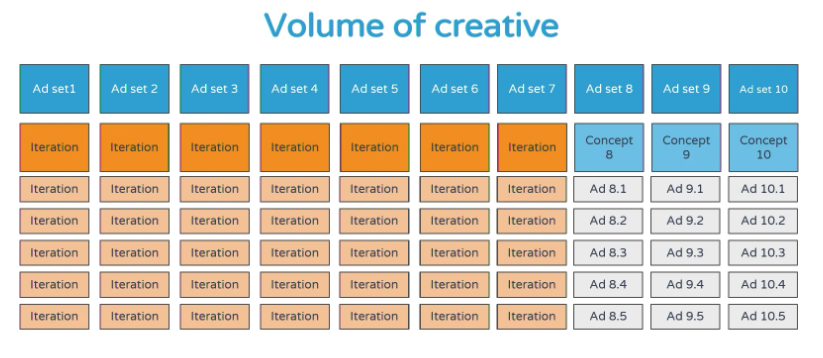
Maintain a 70% iteration/30% new concept ratio in your creative testing mix. This balanced approach ensures you're extracting maximum value from proven winners while continuously exploring new territory. Adjust this ratio based on diminishing returns from iterations.
"We keep a ratio that's more or less 70% iteration, 30% net new concept. That is something that can fluctuate. Let's say your iteration are not yielding anything in terms of results. You've squeezed everything out of your creative, 30% iteration until you hit pay dirt in a really good new concept."
How to 10X Your Creative Testing Without Losing Your Mind at 12:21 · Featured in Growth Gems #126
Sylvain's take: Biggest low-hanging fruit I’ve seen in terms of creative strategy? Being satisfied with having found a creative win and not iterating on it like crazy.
Creatives
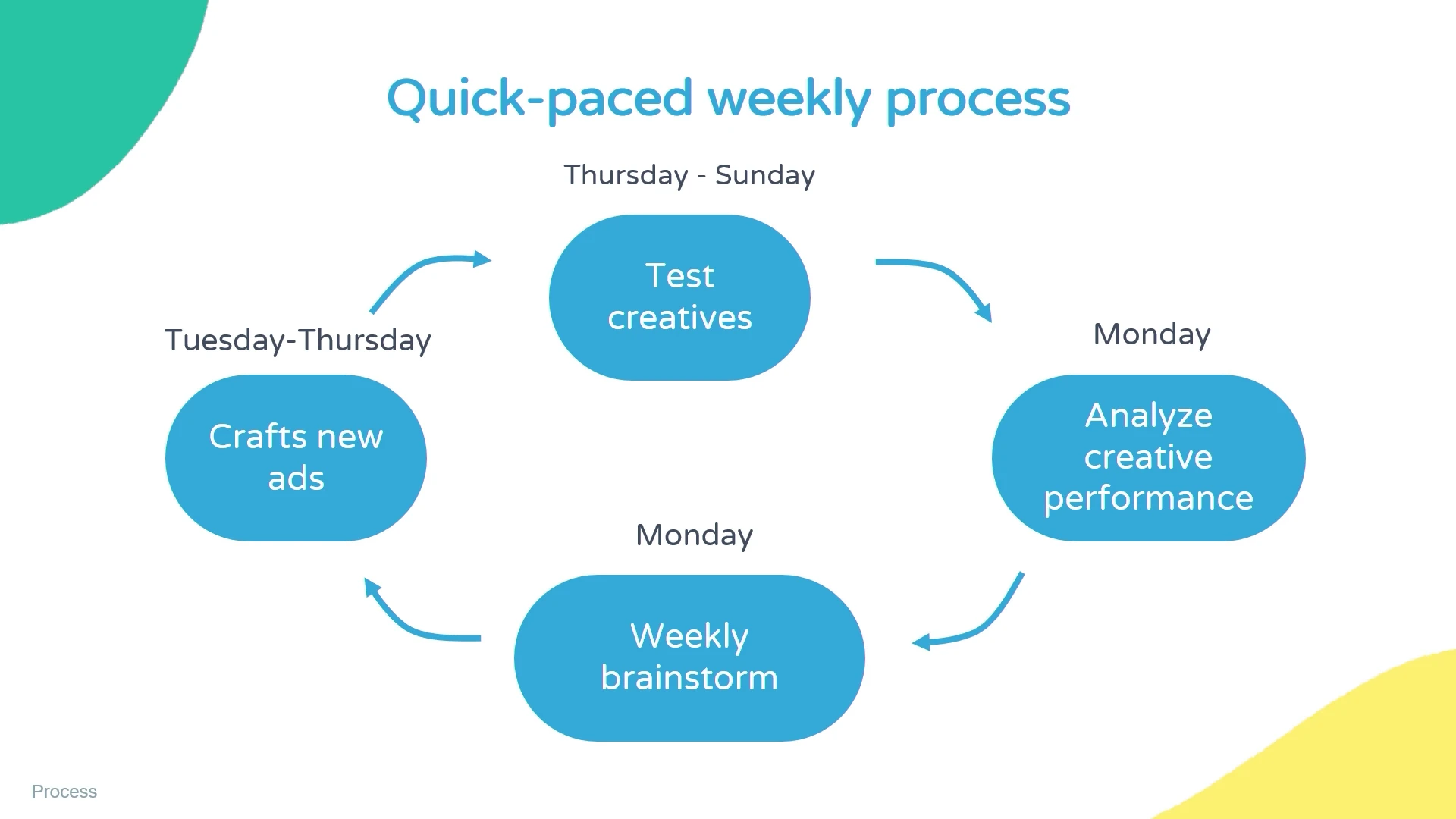
Implement a structured weekly creative testing cycle where you analyze results, brainstorm based on learnings, and quickly iterate. This consistent cadence creates a flywheel effect where each week's insights feed into the next week's creative development.
"So, what you want to do is to have a weekly process of testing where you're learning and iterating every single week. So, it can look something like that. On Monday, uh, the UA manager is going to analyze the results of the creative test, look at what worked, what hasn't worked, and then they're going to take that and organize a weekly, uh, brainstorm that is managed by the UA creative manager."
How to 10X Your Creative Testing Without Losing Your Mind at 10:29 · Featured in Growth Gems #126
Sylvain's take: For Pok Pok, performance is better Thursday-Sunday so that’s why they decided on the process below: they use a short 3-day window to determine winners/losers in order to maximize data quality (and move faster).
I believe this might lead to some “false-positives”, but I still think it’s smart because it’s better than missing out on a potential winner. You often hear that a winning creative can’t be missed, but there is such a thing as finding creatives that are “good enough” and that you can rely on when scaling (if you already have some good-performers and you’re above target).
Creatives
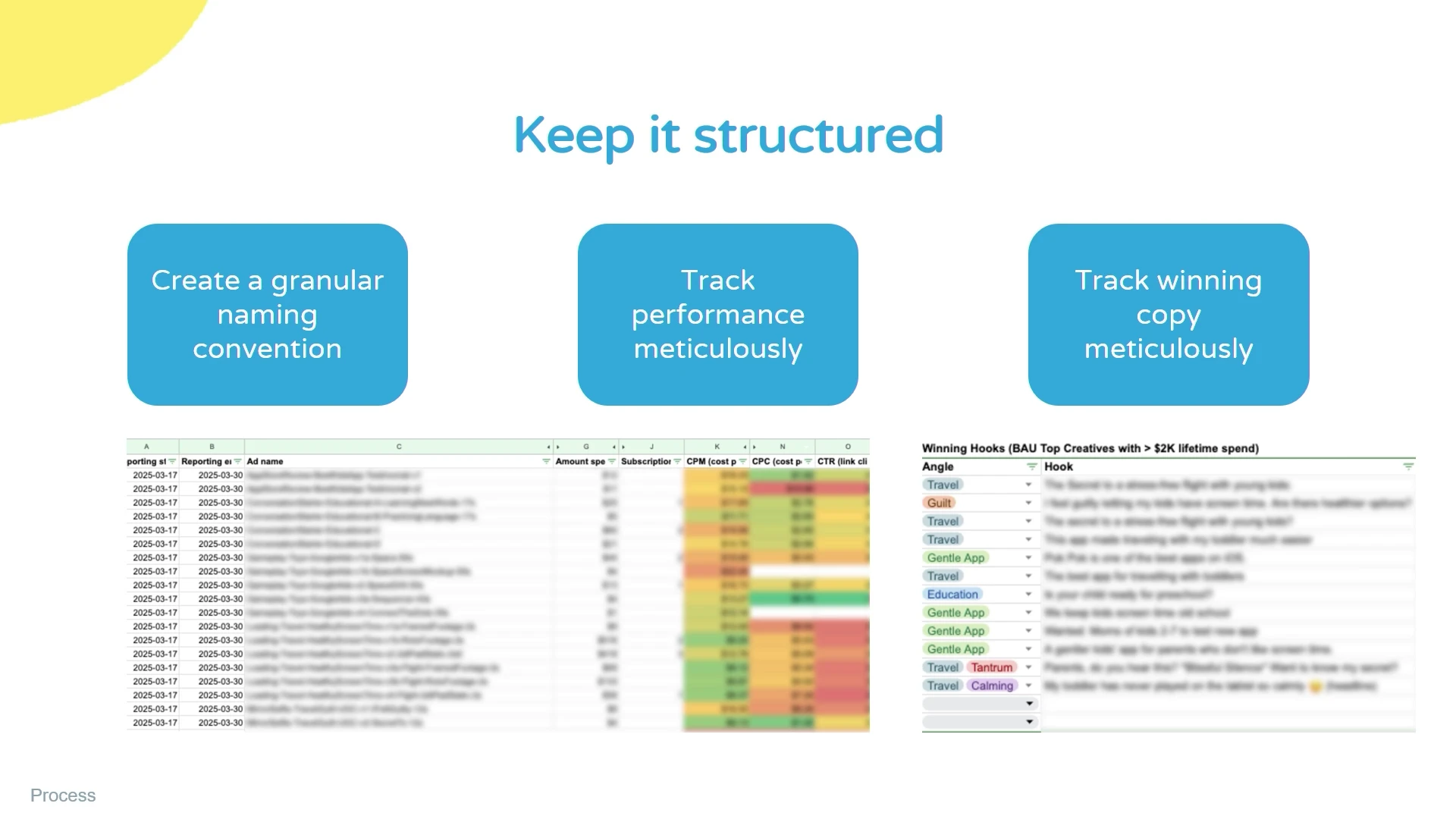
Implement a granular naming convention for your creative assets to enable deeper data analysis and pattern recognition. Don't rely on Meta's reporting tools alone - track performance metrics meticulously in your own system to maintain historical data and uncover long-term insights.
"Other couple quick tips, uh, that are working for us is having a naming convention. That's something you can't underestimate, uh, making it granular enough so you can parse a lot of data and do an analysis that is going to help you find stuff, um, that has worked in the past. Tracking your performance meticulously. So all your major, uh, metrics, it's not going to live in Meta forever, and also it's a bit hard to access even with the reporting tool."
How to 10X Your Creative Testing Without Losing Your Mind at 14:11 · Featured in Growth Gems #126
Sylvain's take: A granular creative naming convention is a no-brainer, at least in theory. Why wouldn’t you do it?
In practice, it’s much harder than it looks to put in place correctly, especially when working with a couple of agencies:
There is such a thing as being “too granular” → you can make things too complicated and slow your team/agency down
You put a lot of effort into carefully naming 95% of your creatives for “nothing” since they will fail (yes you can learn from failed creatives, but how much you learn also depend on how much they fail)
If you don’t define the right “modules” from the start, and you then change your granular naming convention, it’s a mess
So, choose carefully. And be ready to “police” your freelancers and agencies…