Growth expert leaderboard · Expert

Hannah Parvaz

Curio · LinkedIn

18 insights on Paid UA, User Research and Creatives from 5 talks and podcasts, each with the quote and a link to the moment it was said.

Is this you? Suggest an edit

User Research

Creatives

Data

Strategy

Strategy

I consider adding any paid acquisition channel the highest effort because it is ongoing—it’s “forever.”

Avoid Growth Traps: How & When to Diversify Channels at 25:40 · Featured in Growth Gems #117

Sylvain's take:

This hit home.

It’s particularly relevant when you choose between adding a channel and another time-bound growth initiative.

Something else that is important to consider is how much you can scale the new channel you want to add. Thiago Monteiro (then at Peak Labs) was saying that if they can’t scale a channel to 5% of the overall mix, they do not invest.

Other

Talking to customers is the most important and the very first thing you need to do. It’s not product interviews; it’s psychological interviews to figure out what’s going on in their mind. Why are they using your product? What would they be using instead? How do they articulate it?

Building a Full-Funnel Growth Strategy · Featured in Growth Gems #122

Sylvain's take:

Hannah mentioned you shouldn’t think your competitor is necessarily another app: often, it’s just the user not doing anything.

Here’s a unique user research question David (co-founder at Moongate) shared during the roundtable: “Why do you think the Meta algorithm targeted you for this product?”

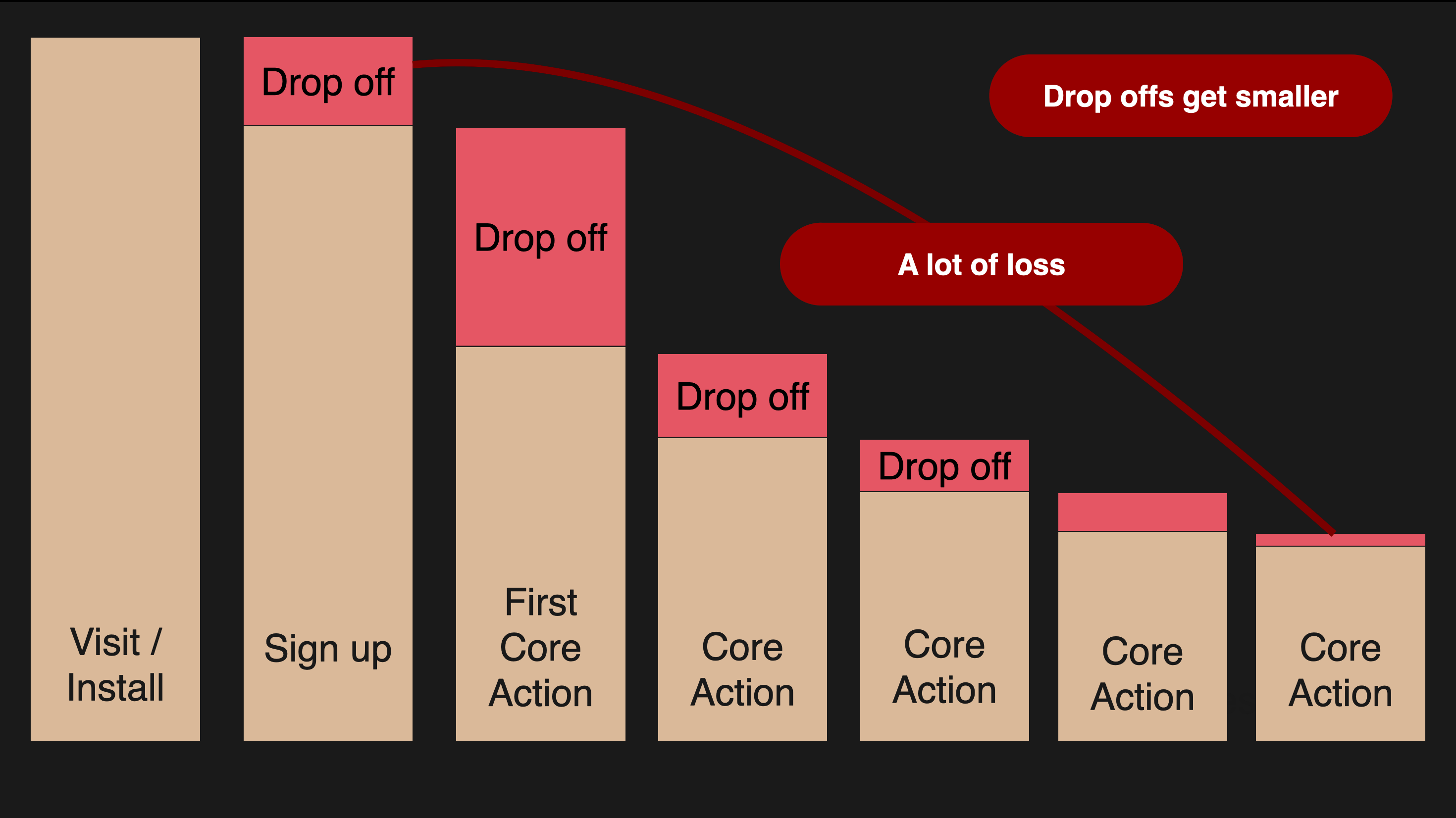
Plot your core action on a drop-off funnel to understand the drop-off between signup and the first moment users do the core action (e.g., 50% drop-off). When you see several smaller drop-offs between core action events, that’s your activation moment (e.g., activation moment = 6 core actions).

Building a Full-Funnel Growth Strategy · Featured in Growth Gems #122

Sylvain's take:

Drop off gets smaller = activation moment

You also need to talk to the people who didn’t make it to the activation moment, depending on where you see the biggest drop-offs. Run retargeting ads like “win a $100 for answering a question,” then ask for signup, and finally, ask them if they’re up for a customer interview.

Building a Full-Funnel Growth Strategy · Featured in Growth Gems #122

Sylvain's take:

To do this, you can create custom audiences on Meta and retarget them.

Hannah said you shouldn’t incentivize people inside the product unless you’ve really tried to get them and you couldn’t. As mentioned in Growth Gems #117, this gets harder as you move up the funnel.

One lower-cost option for incentives is to use a subscription benefit (e.g., X months free) instead of money.

Your north star metric must encompass both user and business needs. It should have a core action, a cadence, and a revenue component. Example: weekly “reading” subscribers. Ratios are very easy to manipulate, so that won’t work.

Building a Full-Funnel Growth Strategy · Featured in Growth Gems #122

Sylvain's take:

This is similar to the gem from Hannah I shared in Growth Gems #105, where she also suggested a next step: “Then, for both free trialers and people who dismissed the paywall, work step-by-step on reducing friction to have them reach this activation point: making it simple, reducing friction with autoplay, showing tooltips, gamification with rewards, etc.”

For more gems on Activation 👇

For a thorough refresher on North Star metrics, check out Amplitude’s North Star Playbook.

You still need to think about the Activation of your free users: if you manage to activate them, you have more chances to convert them.

Building a Full-Funnel Growth Strategy · Featured in Growth Gems #122

Sylvain's take:

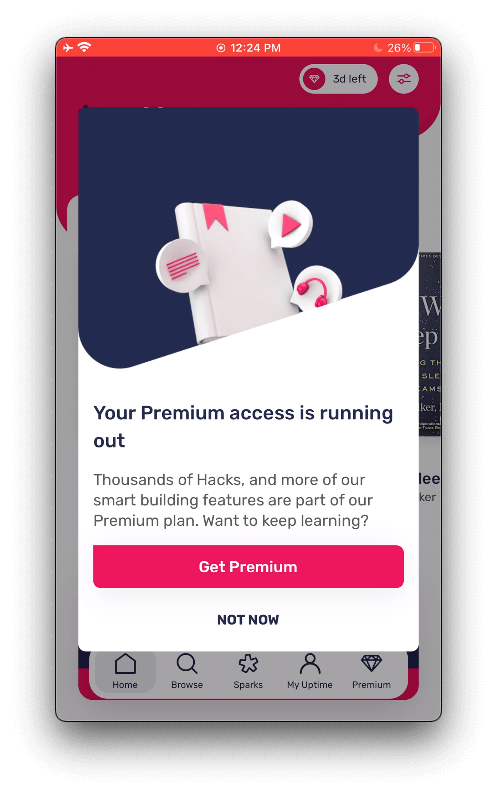
One thing Hannah tried at Uptime was a “reverse trial” for users who would not initially convert to trial. At the end of the trial, users were presented with an “I want to lose access” CTA.

The pop-up offering the “reverse trial”

A prompt I got soon after (during the trial period)

Elena Verna shared some thoughts on reverse trials and a few SaaS examples here. I don’t think it’s that common in B2C subscription apps (I have one more example), but I find it particularly interesting as a backup offer.

Thomas also mentioned that softer paywalls can lead more people past the paywall to activate, grow the free user base, and do other actions (e.g., invite friends, share).

Halfway through the trial, email users that haven’t activated yet. They often write back.

Building a Full-Funnel Growth Strategy · Featured in Growth Gems #122

Sylvain's take:

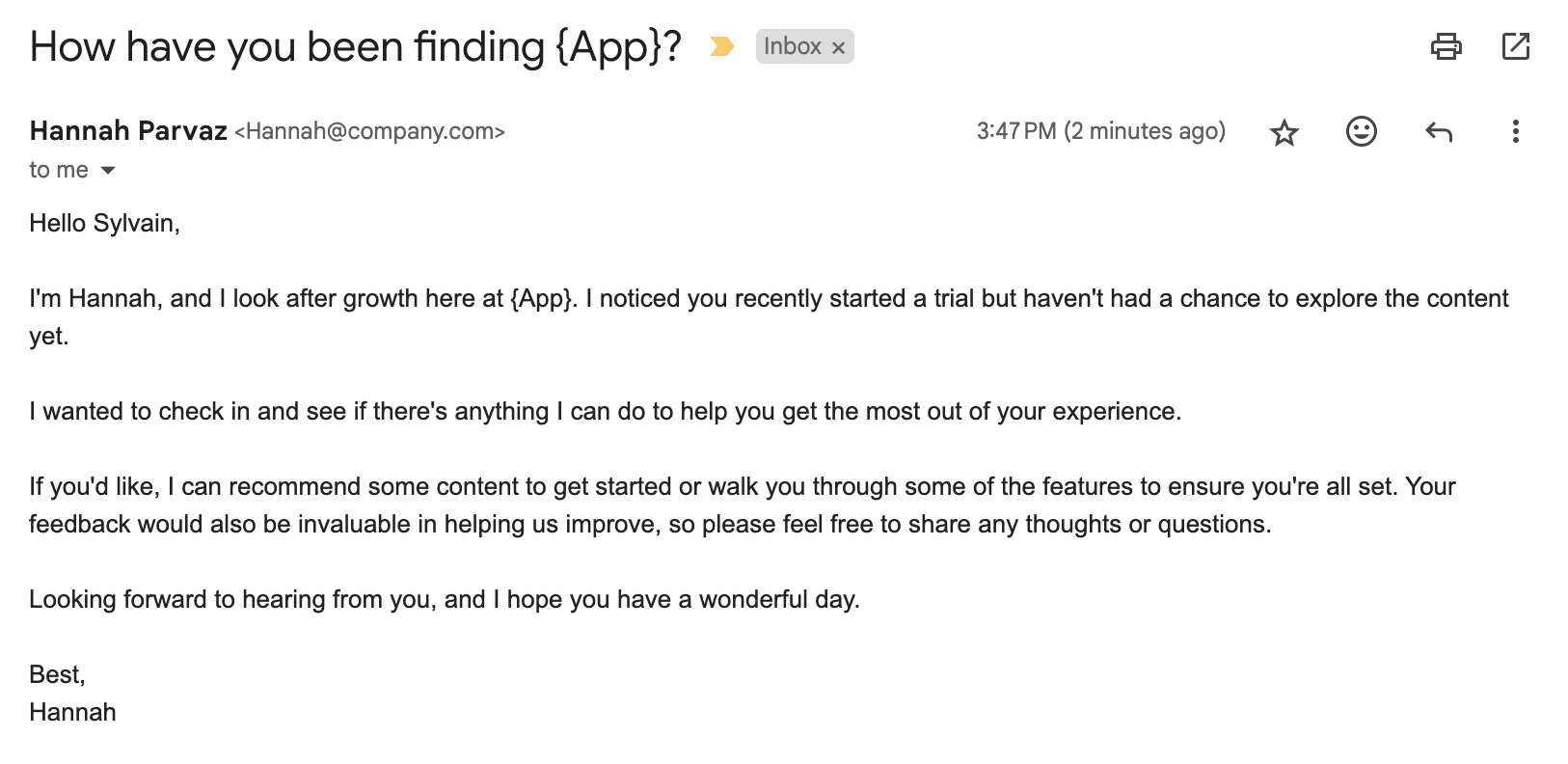
Something that might help your conversion rates: introduce yourself as “I’m the developer of that” feature or send emails “from the CEO”. Here is an example Hannah made:

For users still in the product, you can use a pop-up sending to a Calendly.

A signup or a trial is a meaningful action, but it’s not your core action: a core action needs to be repeatable and show a genuinely interested user. Example: at Curio, it was initially hypothesized as when someone presses “Play” on a piece of content, but then it shifted to when someone listens to 95% of the content (they found out that people were skipping the end credits, and this didn't impact activation).

Building a Full-Funnel Growth Strategy · Featured in Growth Gems #122

Once you have your north star metric, figure out the key levers to impact it. Whether they work in Acquisition, Activation, or Retention, everyone in your business should be able to understand how they impact that metric and focus on the most impactful work to drive it.

Building a Full-Funnel Growth Strategy · Featured in Growth Gems #122

If someone has taken out a trial or a subscription and cancels early on in their journey, they may not have reached their activation moment. It's possible to win these customers back, but it requires a deep understanding of their blockers—which means speaking to them (e.g., getting on the phone).

Building a Full-Funnel Growth Strategy · Featured in Growth Gems #122

Sylvain's take: