Growth expert leaderboard · Expert

Sviat Hnizdovskyi

· LinkedIn

17 insights on Monetization, Onboarding and Activation and Strategy from 4 talks and podcasts, each with the quote and a link to the moment it was said.

Is this you? Suggest an edit

Monetization

Monetization

If you’re just getting started, don’t test micro-improvements.

  • Take 2 or 3 examples of what seems to be the best paywalls_ (e.g., Blinkist paywall, Flo, paywall with 3 subscription tiers)_ and measure the ARPU over time of these 3 tests.
  • Test increasing the frequency of how much you show the paywall
  • Then, move on to pricing tests to understand your pricing elasticity_ (e.g., there are “sweet spots” for yearly plans like $49.99, $59.99, and $89.99)_

240 A/B tests later: Two philosophies for optimizing your subscription app · Featured in Growth Gems #84

Monetization

When you start (especially if you bootstrap), and you want to run user acquisition, you have to be pretty “aggressive” with monetization to be able to compete on the ad auction. If you give too many features for free and don’t show paywalls frequently, then you don’t provide the opportunity for users to pay for your product.

240 A/B tests later: Two philosophies for optimizing your subscription app · Featured in Growth Gems #84

Sylvain's take:

🤔 My 2 cents: Sviat shared that ”Aggressive” has a negative connotation, and I agree, so I sometimes use “straightforward”. It’s also a spectrum, and you must find the right balance. But your app will have less impact if it doesn’t grow or if you can’t sustain it.

Monetization

For early-stage startups, identify the top 5 competitors monetizing the best (especially if they have a bad product) and start with what they do (e.g., paywall).

Sviat Hnizdovskyi from Applica.agency at 11:25 · Featured in Growth Gems #80

Sylvain's take:

⛏️ Going Deeper: don’t A/B test if you don’t have enough volume, but make sure you try the change for at least a week, probably two weeks.

For the subscription retention of this cohort, don’t rely on benchmarks. Take the first two weeks to see how many subscription cancellations you have. Plot the chart and assume that your curve of unsubscribe rate will have a logarithmic shape.

Monetization

A lot of early-stage apps would benefit by increasing their price by at least 20-30%. Almost everyone who just launched an app has imposter syndrome and doesn’t dare to charge a high price for their subscription.

Sviat Hnizdovskyi from Applica.agency at 9:55 · Featured in Growth Gems #80

Onboarding and Activation

Onboarding and Activation

Three things that matter for monetization besides paywalls and prices:

  • Onboarding experience: what questions you ask, how you design your login screen, what product benefits you show, etc.
  • Pushs, emails, in-app messages strategy: trying to get users that did not convert initially.
  • Discounts: lowering the price with a sequential price drop.

Sviat Hnizdovskyi from Applica.agency at 14:34 · Featured in Growth Gems #80

Onboarding and Activation

Create a spreadsheet to map all your previous experiments by category (e.g., paywall, price monetization, onboarding length). Look at the areas where you’ve tested less, and prioritize tests in that category to avoid the diminishing returns of over-testing a type of experiment.

Episode from Adapty’s SubHub podcast · Featured in Growth Gems #80

Strategy

Strategy

At the very early stage of a subscription app, the team shouldn’t focus on improving the product but on making changes to the very first session (activation flow, onboarding funnel, paywall, etc.). It’s not efforts to improve product retention that will bring you a better LTV (especially for health & fitness, education, and entertainment).

Episode from Adapty’s SubHub podcast · Featured in Growth Gems #80

Sylvain's take:

⛏️ Going Deeper: it sounds counterintuitive, and Sviat gives the precision that this is truer for apps where the initial user impulse is strong, and intent might fade later. You can’t focus only on the first session forever, but optimizing it will help you get enough people in (and paying).

Other

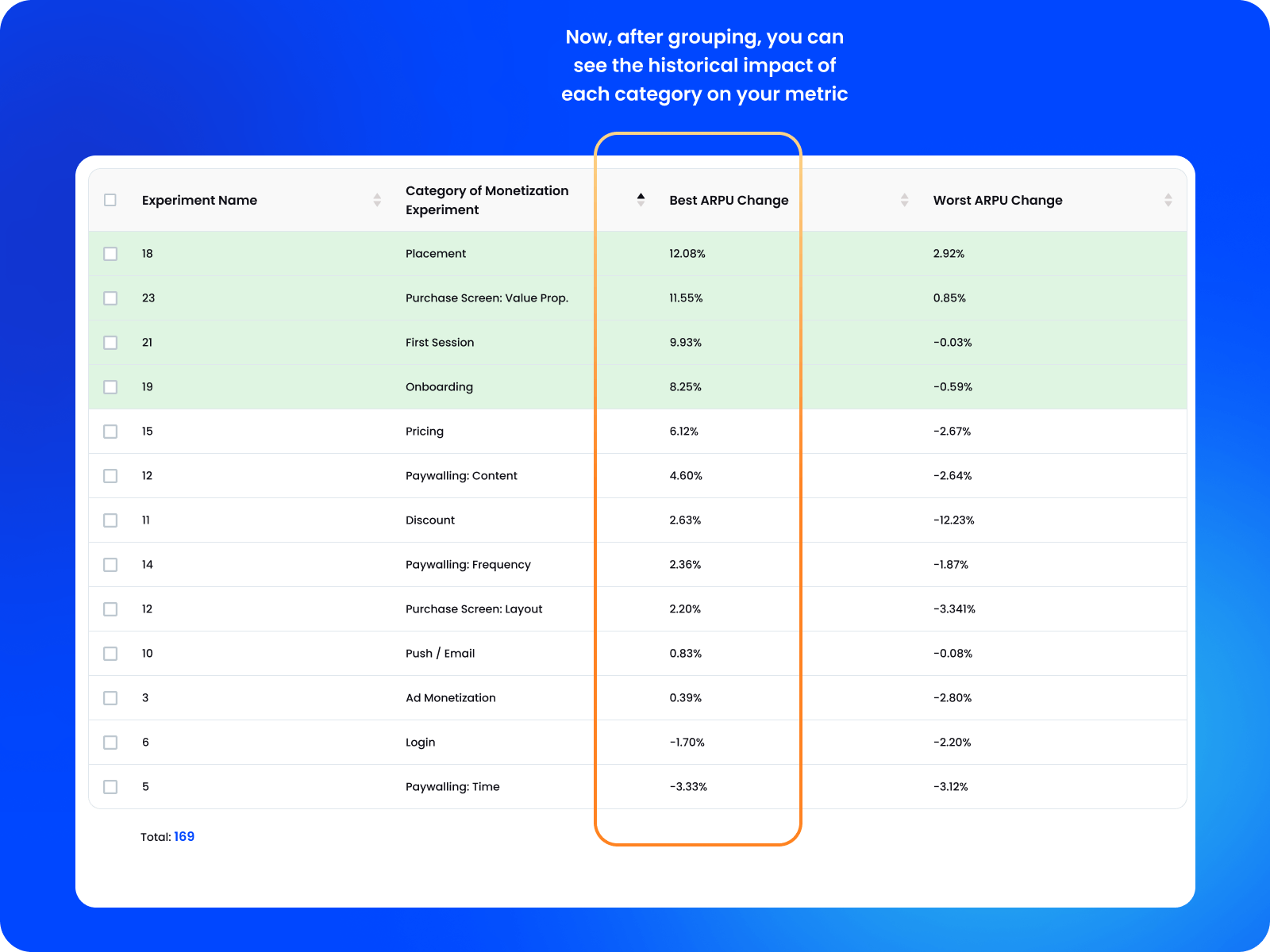
List all your growth experiments and categorize them: subscription price, discount, frequency of the paywall, onboarding survey first screen, onboarding survey questions, etc. Use this to understand which categories (and even subcategories) you’ve optimized the most so far, and define which categories you should target in the future.

Applica: Framework for subscription optimization: tips from behavioral science expert Sviat Hnizdovskyi · Featured in Growth Gems #92

Sylvain's take:

⛏️ Going Deeper: check out Applica’s Experiment History Review Framework article (and the following gems) for more details.

For each test, list the LTV change you’ve had per variant. Then, sort categories of tests per average LTV impact. This helps you understand how impactful a category of tests has been, how promising it might be, and to spot bottlenecks and low-hanging fruits.

Applica: Framework for subscription optimization: tips from behavioral science expert Sviat Hnizdovskyi · Featured in Growth Gems #92

Sylvain's take:

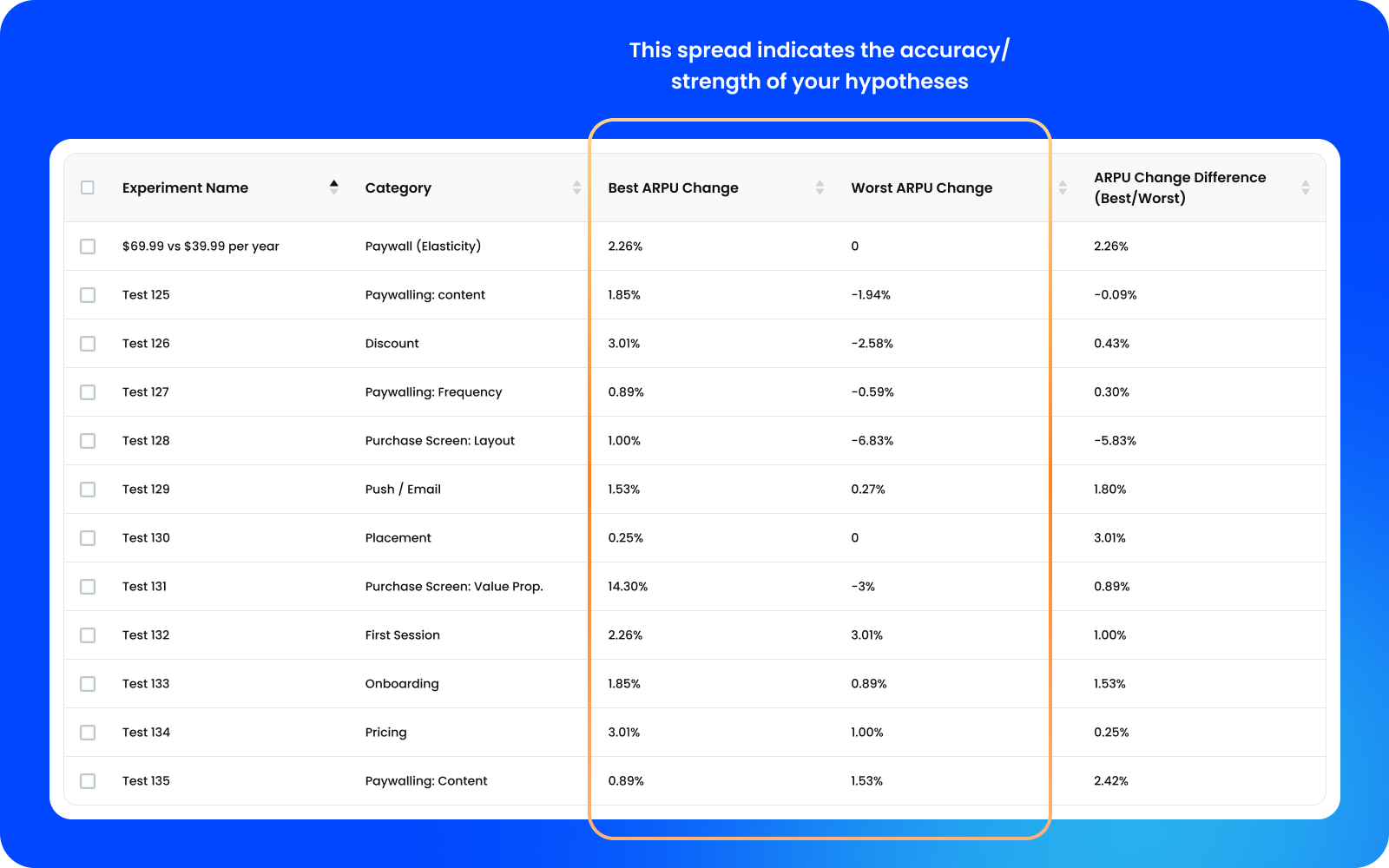
🤔 My 2 cents: initially, you won’t have the LTV for new tests, so it might be interesting to also keep track of the initial revenue per user. That’s actually what Sviat has in his examples:

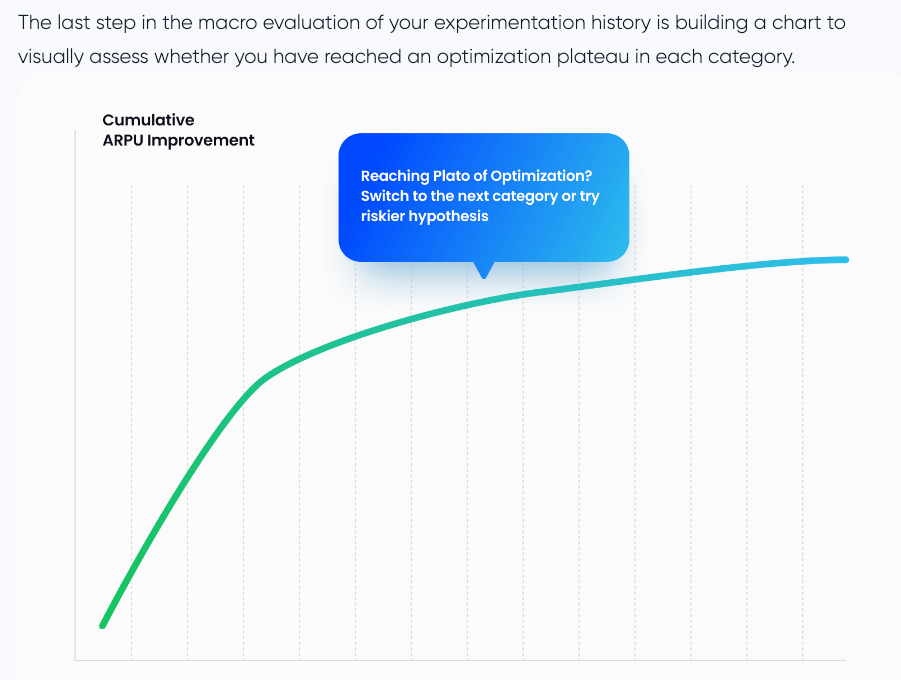
Keep track of diminishing returns as you conduct tests in a category. When you see diminishing returns in a category:

  • Start revisiting some of your assumptions, and think about bigger bets
  • Consider switching to another category

Applica: Framework for subscription optimization: tips from behavioral science expert Sviat Hnizdovskyi · Featured in Growth Gems #92

Sylvain's take:

⛏️ Going Deeper: Sviat shared that this framework can also be applied to retention-focused metrics, product engagement metrics, etc.