Growth expert leaderboard · Expert

Nick Godwin

Head of Product & Customer Growth, Superwall · LinkedIn

14 insights on Monetization, Onboarding and Activation and Data from one talk or podcast, each with the quote and a link to the moment it was said.

Is this you? Suggest an edit

Monetization

Monetization

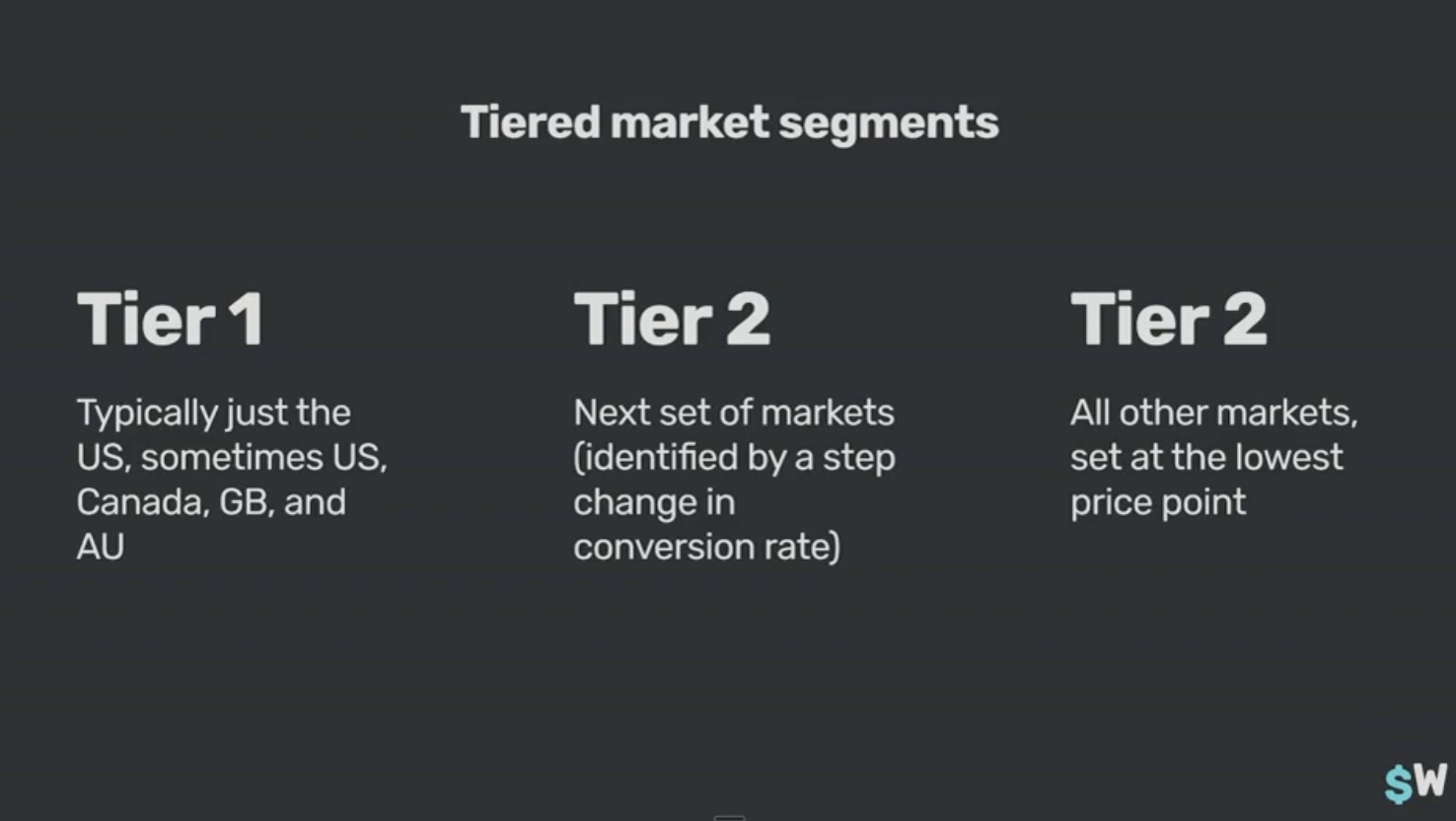
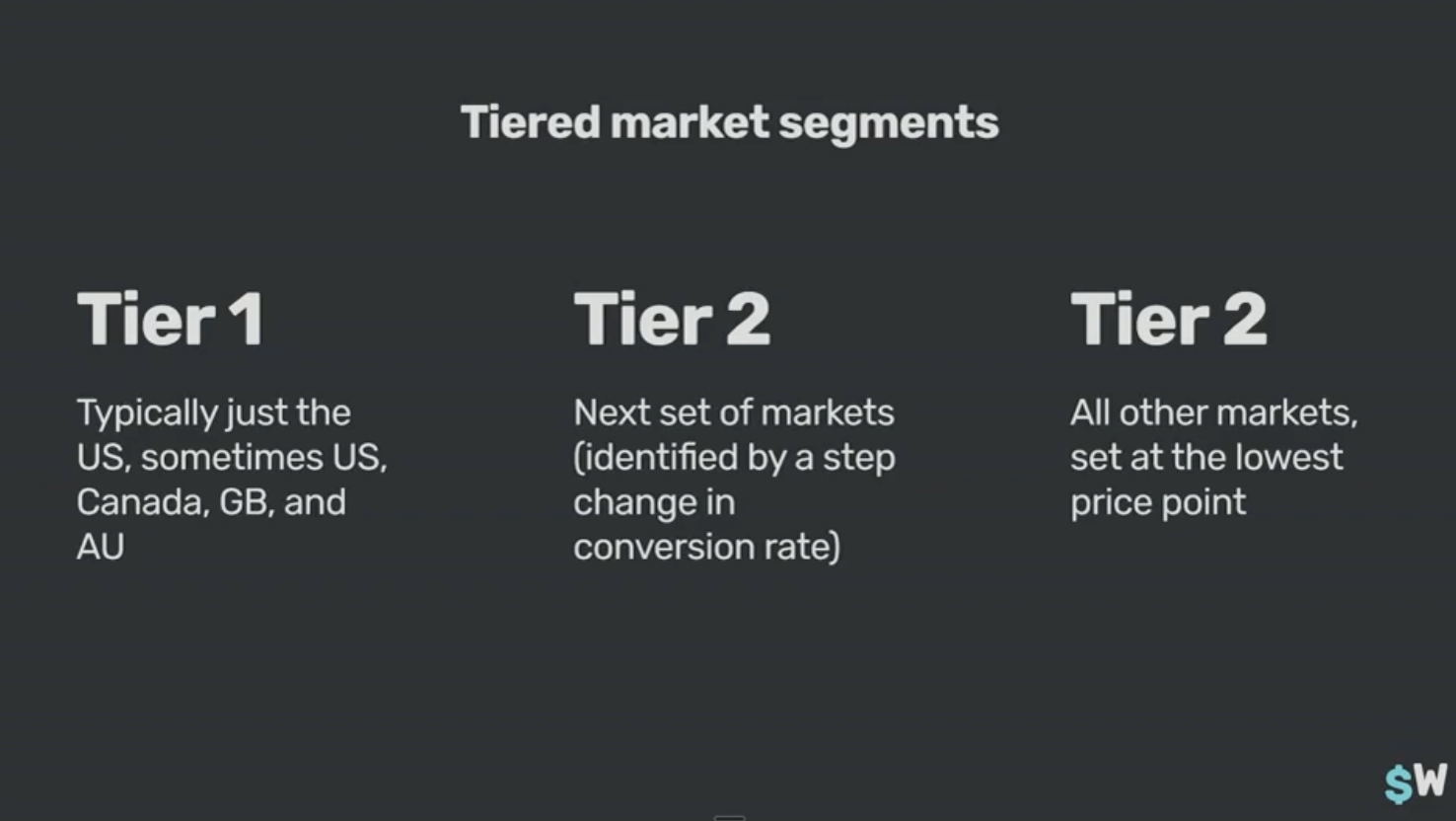
Organize international pricing into tiered market segments based on conversion rate step-changes rather than individual country optimization. This approach dramatically simplifies testing while maintaining pricing efficiency across different market segments.

"The fastest growing apps use what we call a tiered market segments. You might organize tier one is going to be US, sometimes US, Canada, and Great Britain. Tier two is going to be my next set of markets, which is usually identified by a step change in your conversion rate. Tier one is usually my higher price segments. Tier two is going to be my next drop off in LTV price. And then tier three is typically the lowest price I'm willing to accept to convert those users."

The Secret to App Conversion at 14:56 · Featured in Growth Gems #133

Sylvain's take:
Monetization

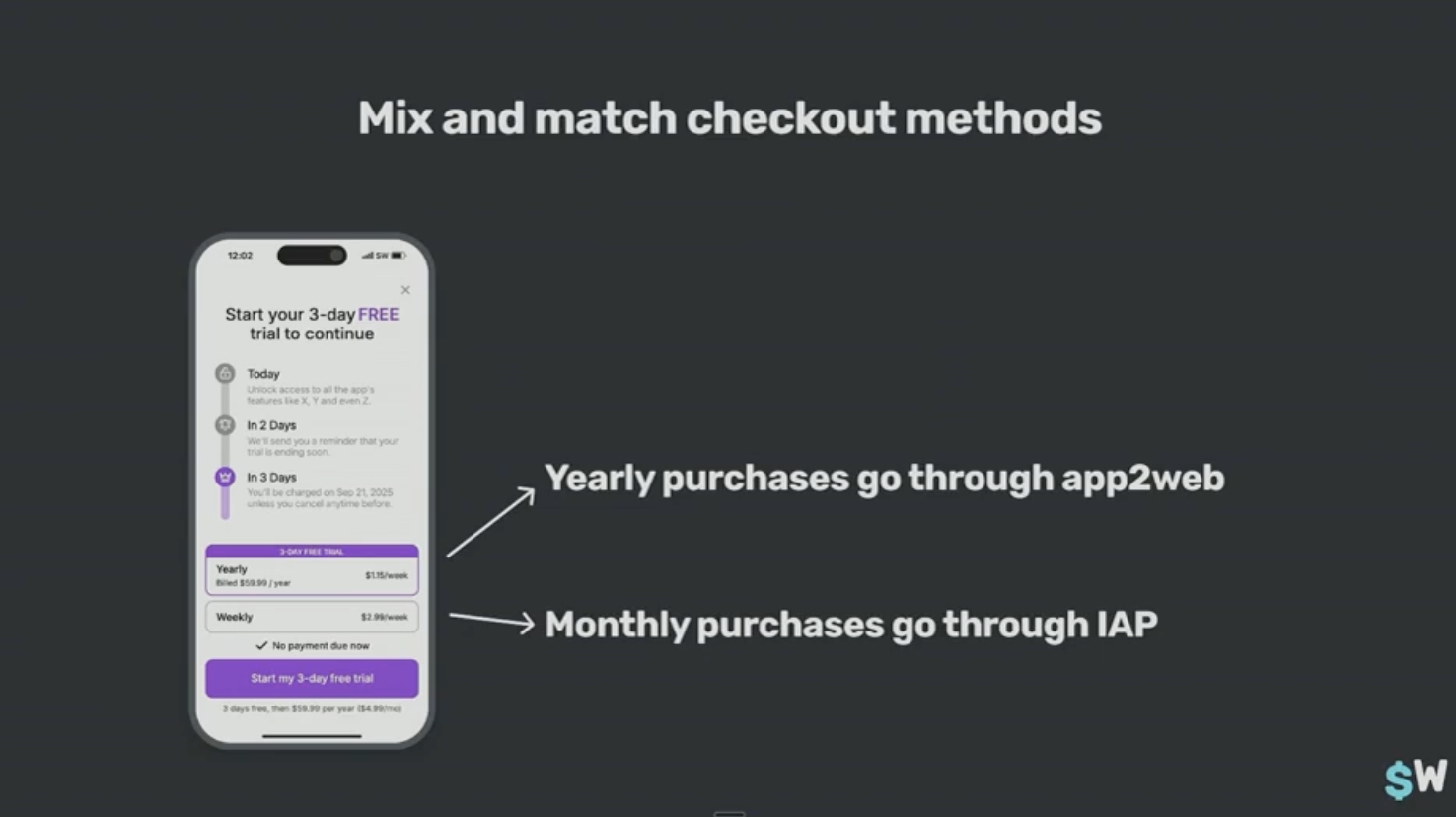
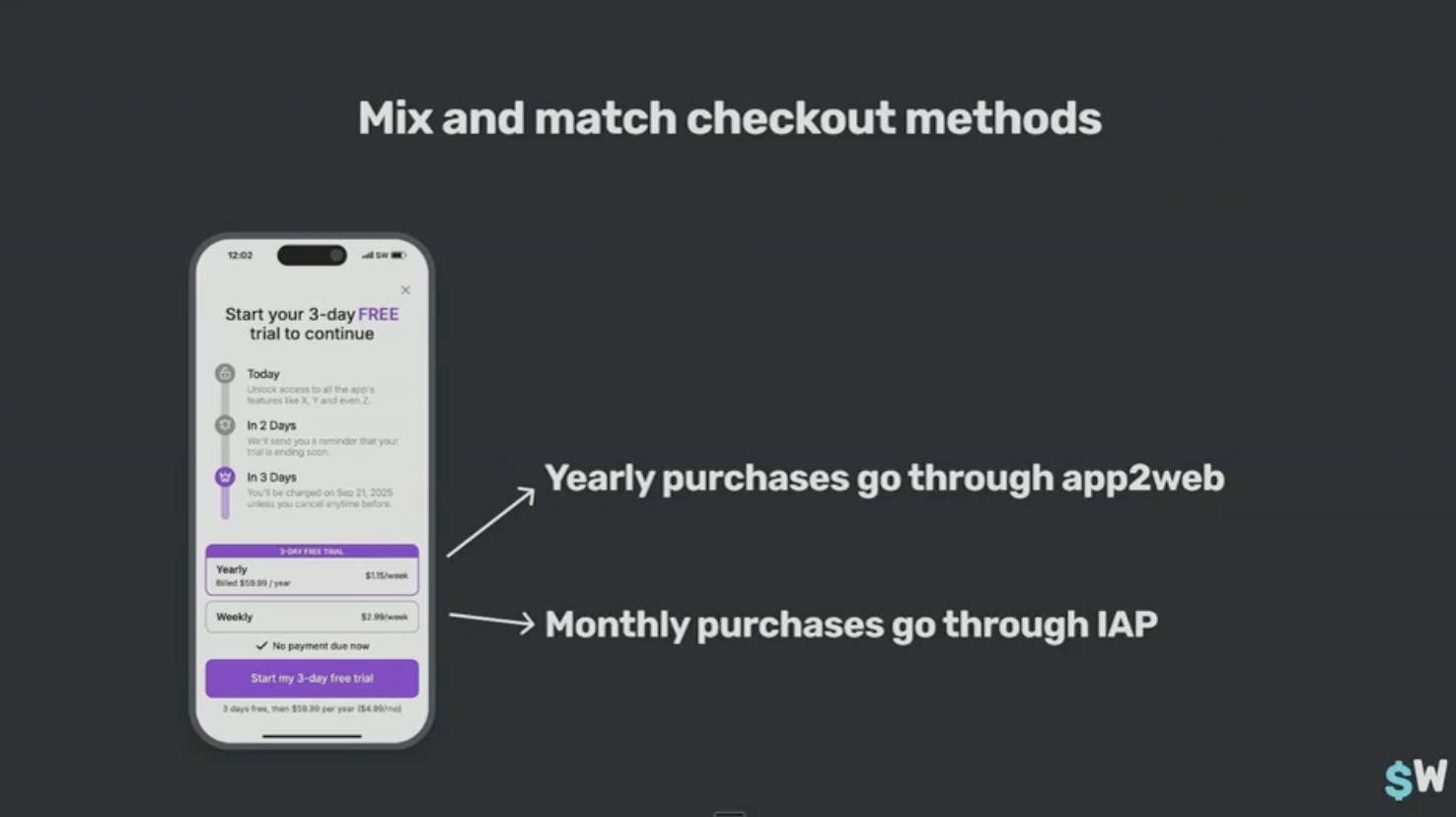
Implement hybrid checkout strategies by routing high-LTV purchases (annual plans) through app-to-web while keeping low-LTV purchases (monthly) in-app. This optimizes for revenue on valuable customers while minimizing operational complexity for smaller transactions.

"He actually ran a test where he mixed and matched checkout payment methods where all of his yearly purchase would go through app to web, but he sent his monthly directly to in-app purchase. And he did this because his monthly subs didn't provide enough LTV value for him to have to worry about managing taxes, fees, chargebacks, but his yearlies were worth it."

The Secret to App Conversion at 19:27 · Featured in Growth Gems #133

Sylvain's take:
Monetization

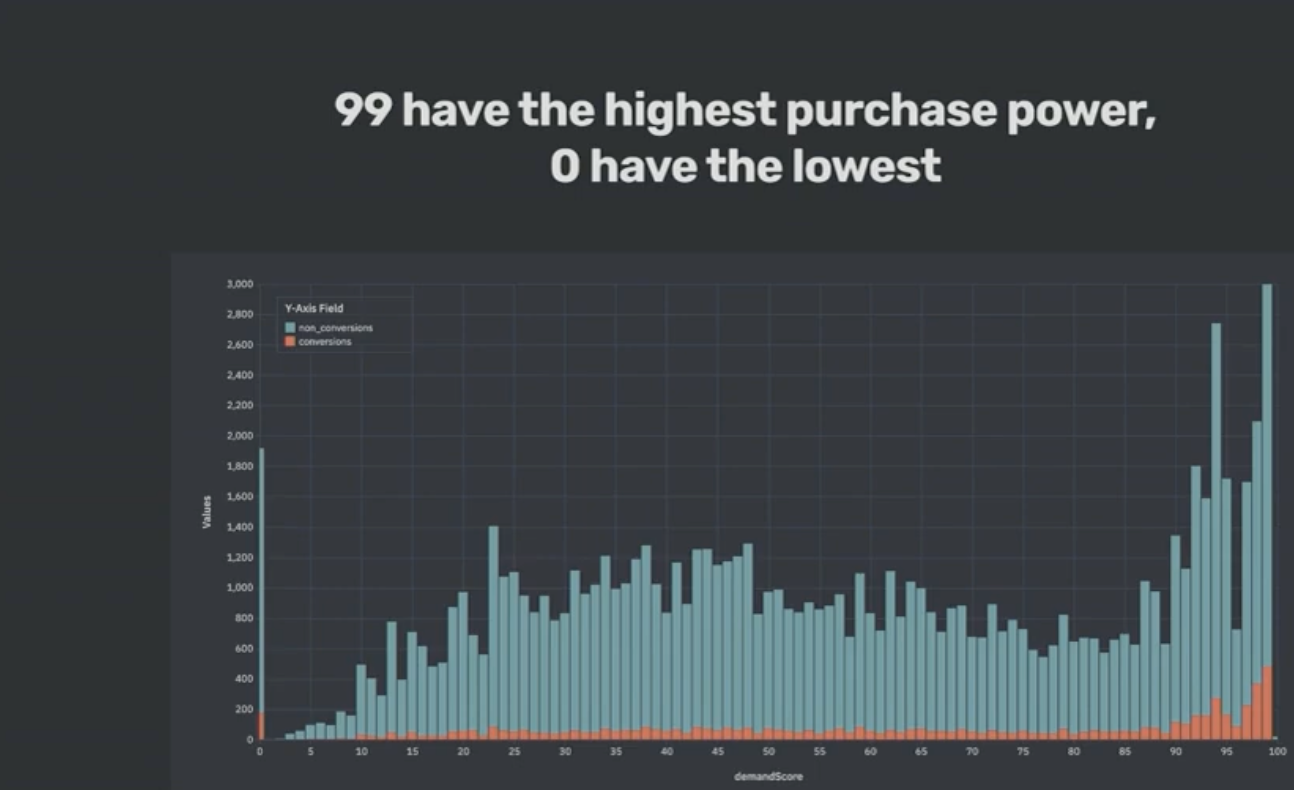
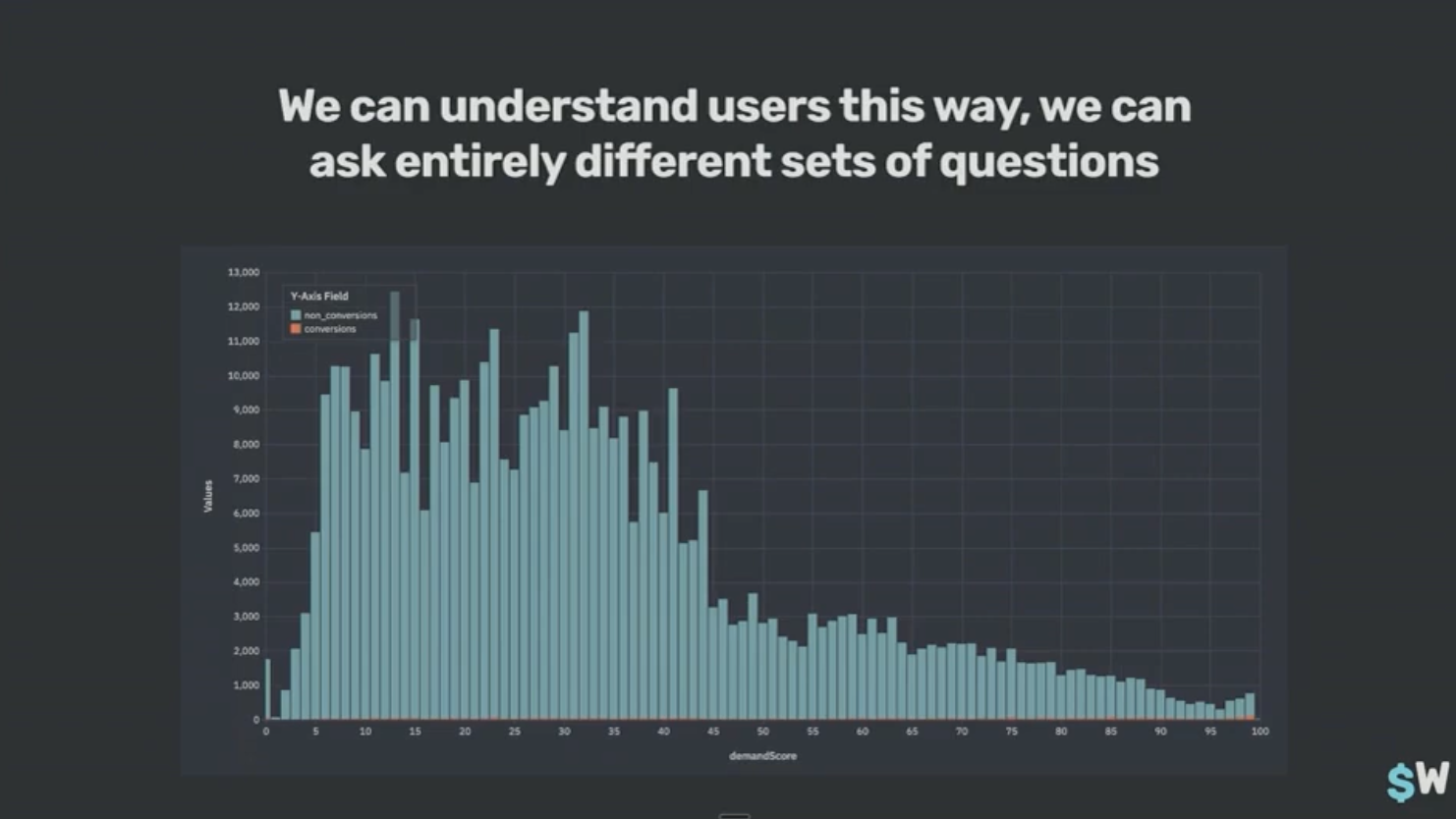
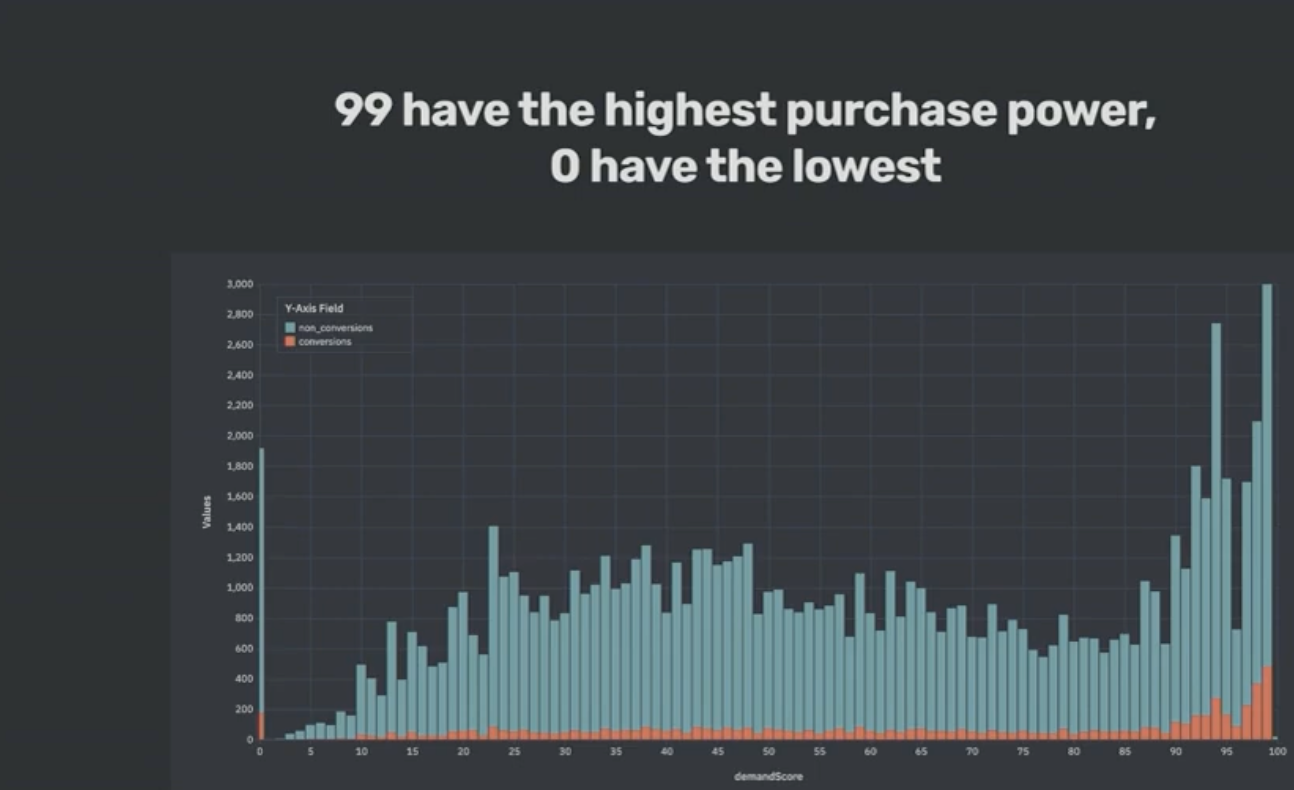
Implement user-level purchase propensity scoring based on behavioral data (paywall views, time since install, device, location) to personalize pricing strategies. This data-driven approach can reveal untapped user segments and optimize revenue per user.

"This year we started beta testing a new feature that we call demand score that asks the question, what is each user's unique ability to purchase at any given moment? We built this model using 100 million paywall interactions, and based on things like total payroll views, time since install, your device model, your country, and it basically ranks users on a scale from 0 to 99."

The Secret to App Conversion at 10:49 · Featured in Growth Gems #133

Sylvain's take:

Superwall has been testing a Demand Score to determine each user’s purchase power. In the example below, the app converts pretty well (orange) for high purchase power but poorly for the long tail of users with low purchase power.

This is the kind of use cases Botsi’s AI Pricing is made for.

Monetization

Retest your pricing every 3-9 months due to rapidly changing consumer behavior and competitive landscape. The AI-driven app development boom is accelerating market changes, making frequent pricing optimization essential for staying competitive.

"They test and then retest pricing every three to nine months. This might seem fast, but at the rate that apps are coming alive at the competitive landscape, the way that small teams are building apps with AI, allowing them to move really quickly, this is the right frequency to run experiments. Your consumer behavior changes. Every month, new AI apps are coming out that have new experiences that users are using."

The Secret to App Conversion at 8:32 · Featured in Growth Gems #133

Sylvain's take:

Recommendation I used to hear was 6-12 months, and maybe this is indeed accelerating.

Monetization

Use physical experiences or adjacent services to increase subscriber retention. Example: a Health & Fitness sells lab work for blood analysis to provide a health score and follow up actions.

The Secret to App Conversion at 25:12 · Featured in Growth Gems #133

Monetization

In growth phase, choose more users over more revenue so you can build long-term market position.

"I have a customer last year. I ran a price elasticity test. The result was 14.7% increase in net revenue, like net proceeds, and then that proceeds would have resulted in 1.85 million per year extra. It's a big chunk of change, but it would have cost them 38% of their total purchases, total converted users. Every time an app that I work with faces this scenario, they always choose user growth."

The Secret to App Conversion at 13:21 · Featured in Growth Gems #133

Sylvain's take:

I’d say it’s not that clearcut. Nick gave a pretty extreme example of +1.85M vs. 38% of total purchase, so that’s a case where the decision is pretty easy (38% is a huge loss…).

There are cases where a small loss in paid users can strategically be accepted if it allows a shorter payback window or higher target CAC (especially if cash flow is tight).

Monetization

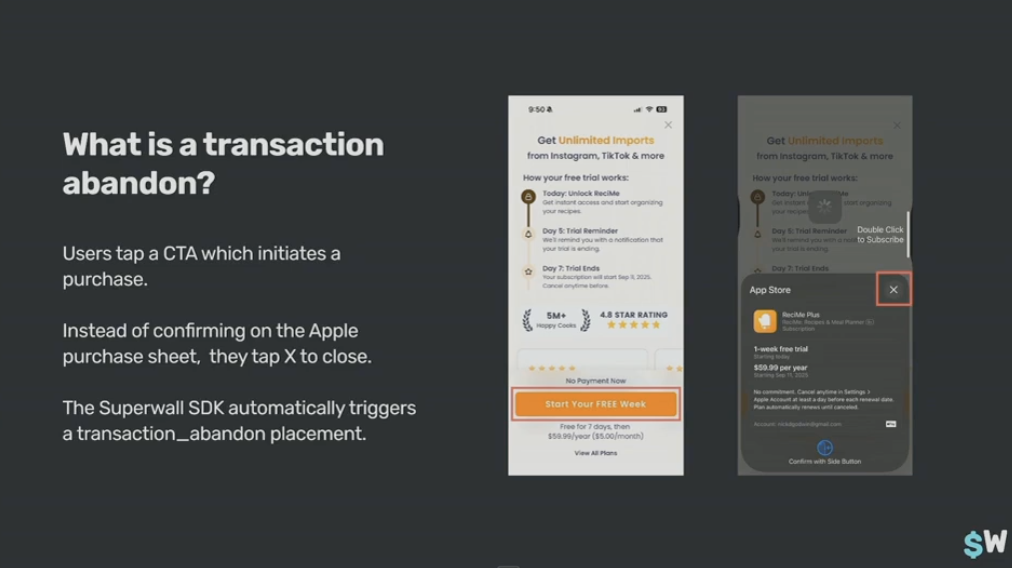
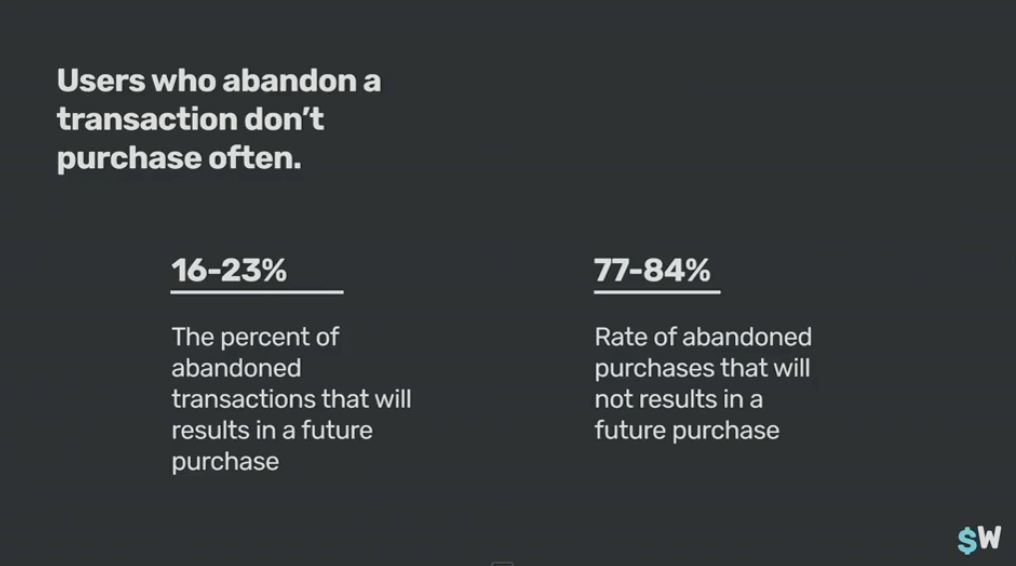
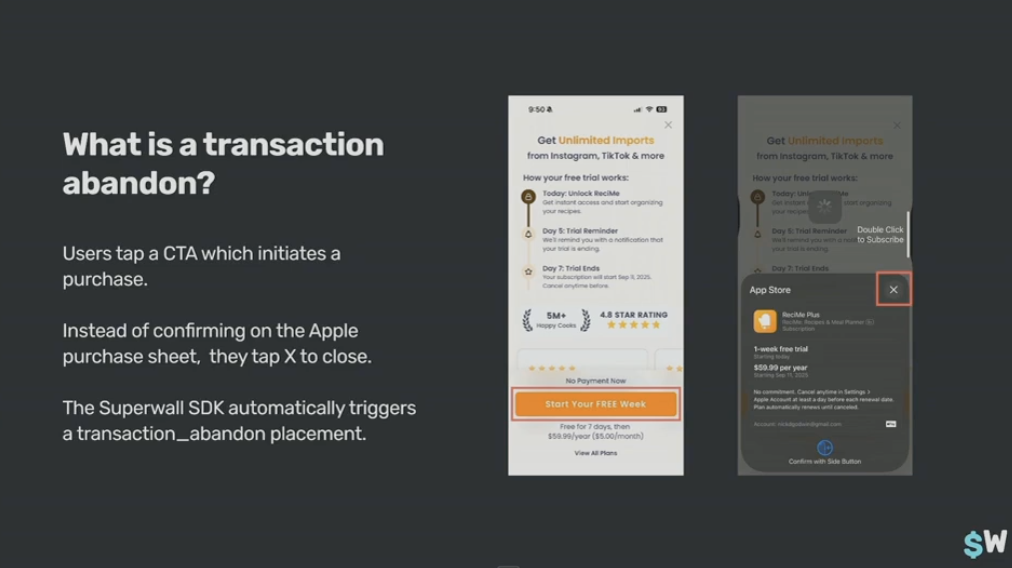
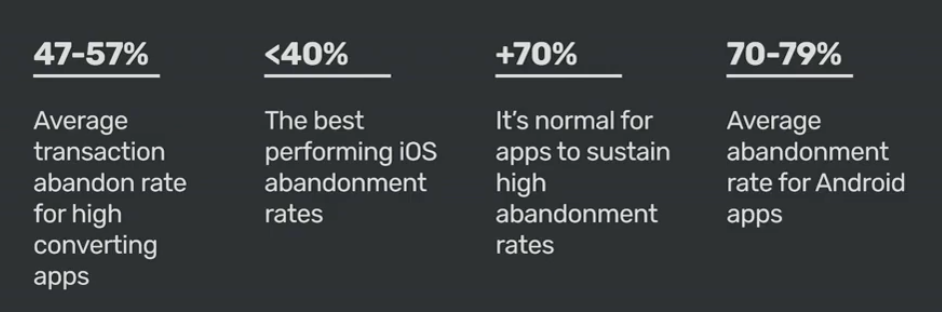
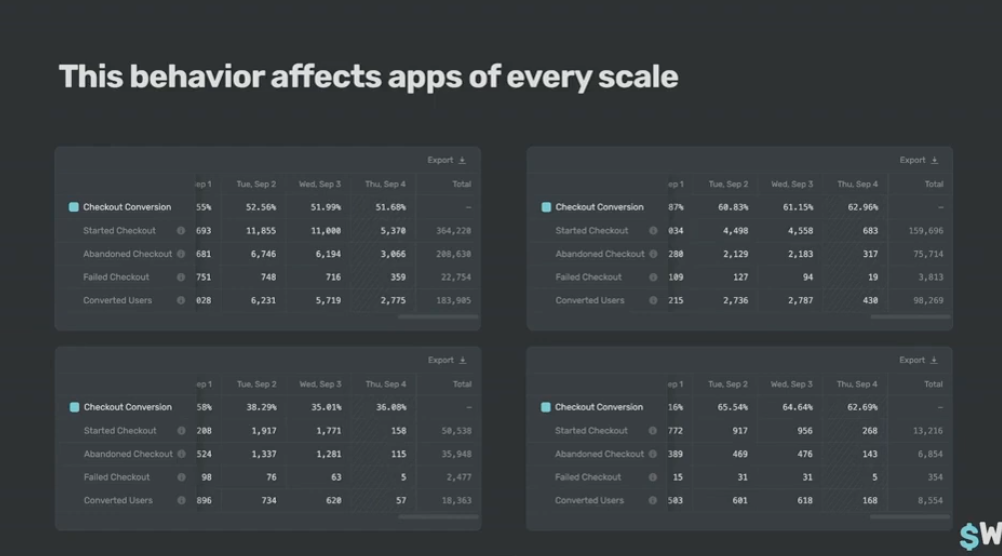
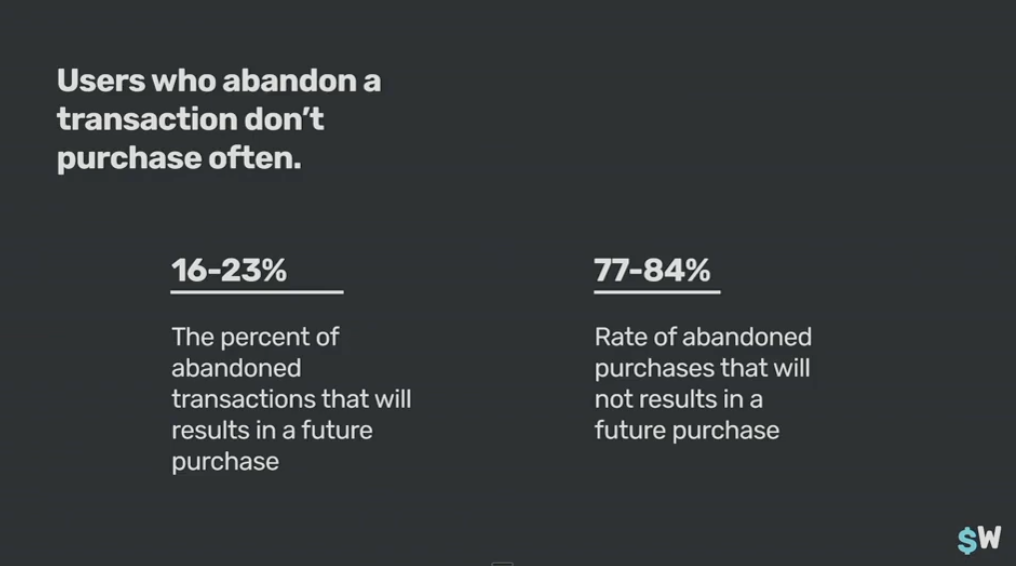
Leverage transaction abandonment campaigns to recover 47-57% of users who start but don't complete purchases. Since only 16-23% naturally return to buy within 30 days, abandoned users represent a low-risk discount opportunity without cannibalizing full-price conversions.

"47-57% of transactions get abandoned for the top performing apps that we see. Only 16 to 23% of those users will come back and actually purchase within the next 30 days, which means you have this huge opportunity of low-risk users that you can offer a discount to, to try and win them back without risk of cannibalizing your total."

The Secret to App Conversion at 23:18 · Featured in Growth Gems #133

Sylvain's take:
Monetization

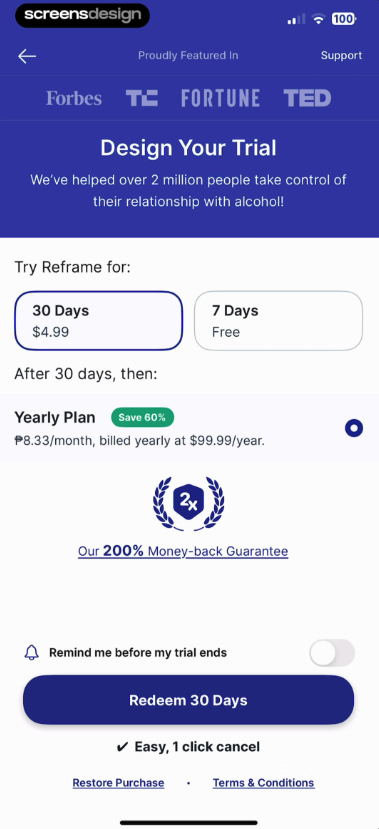
Test paid intro offers alongside free trials by offering users choice between a free 7-day trial and a paid 30-day trial (e.g., $5). This 'design your trial' approach increases both initial conversion rates and long-term trial-to-paid conversion by giving users control over their commitment level.

"We have a design that we we like a lot where we call it design your trial style paywall, where on that paywall we show two yearly plans, but one has a 7-day trial and the other one has 30 days for five bucks, and this provides your users options. Your initial conversion rate goes up, but long-term, your trial to pay conversion rate goes up significantly over time because you're giving users choice."

The Secret to App Conversion at 25:58 · Featured in Growth Gems #133

Sylvain's take:

Reframe is one of several apps doing this.

Onboarding and Activation

Onboarding and Activation

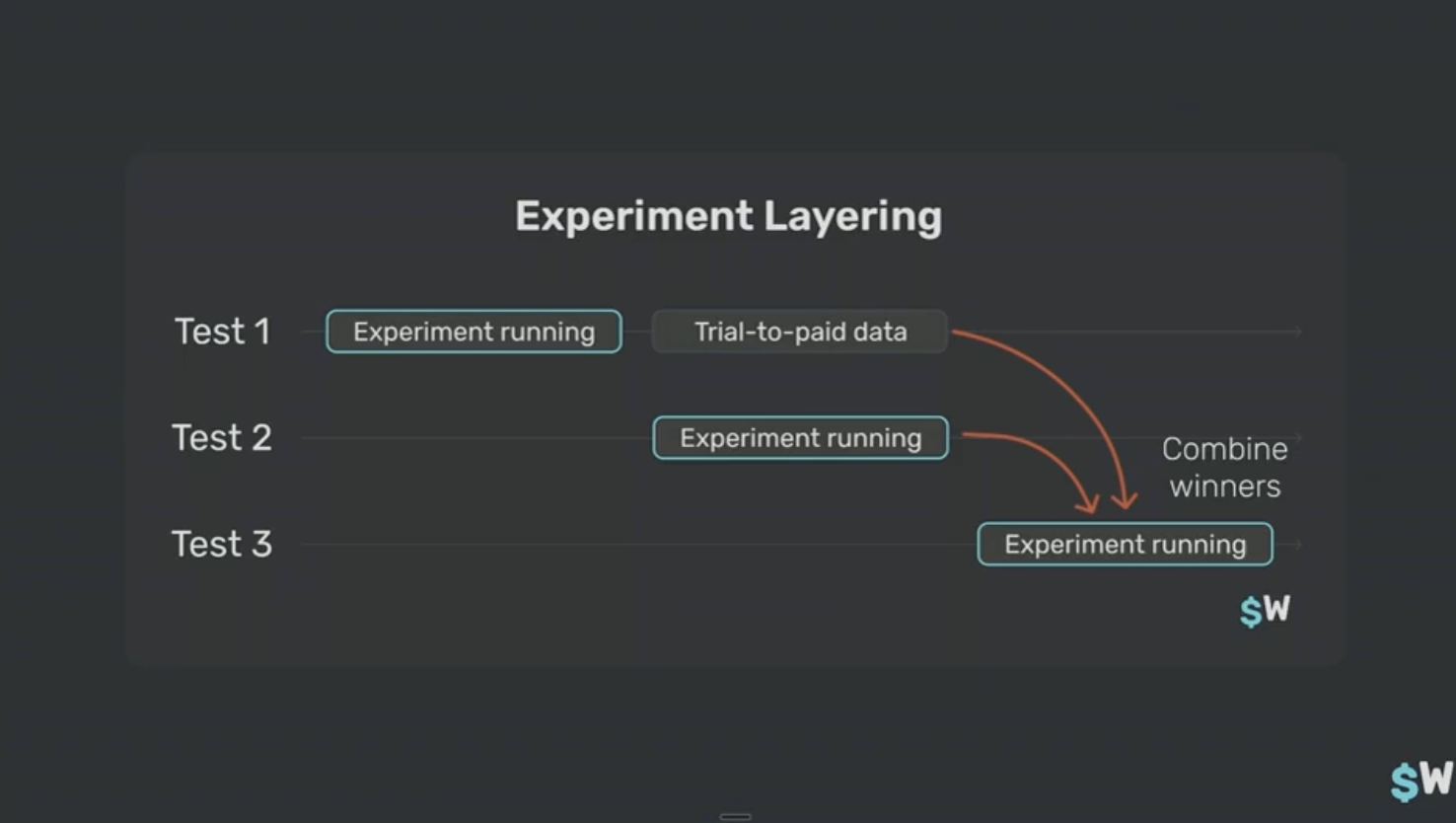
Layer your experiments by starting new tests while waiting for retention data from previous tests to mature. Ensure test hypotheses are independent to maximize testing velocity without compromising data integrity.

"Test A runs for 2 weeks, but once it's paused, it's going to need another 8 days for all the retention data from those trials to come in. While test A is paused, I start test B so that by the time test A's data is mature, test B will have some other data that I'll have with some other variant that's improving or not improving. The key to experiment layering is picking variants where in test B, my hypothesis is not dependent on the results of test one or test A."

The Secret to App Conversion at 6:53 · Featured in Growth Gems #133

Sylvain's take:

This is great advice, and why prioritization should not just follow “scoring” (e.g. RICE score) which can tie you down in analysis and rollout sequencing.
Onboarding and Activation

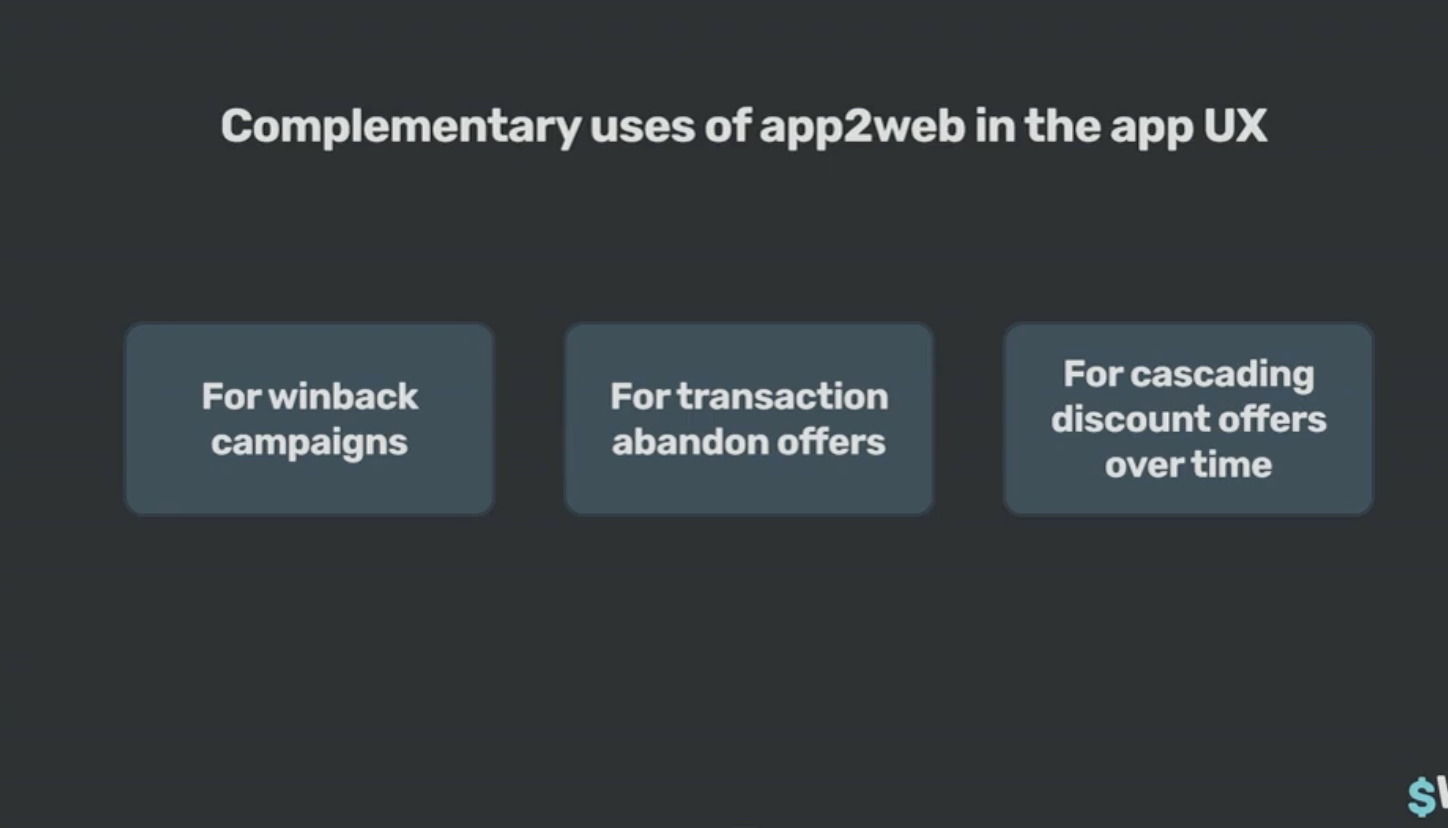
A few ways to leverage app2web from the in-app UX:

  • Winback campaigns: they paid once, there are chances they'll go past the friction of web checkout
  • Transaction abandonment offers
  • Cascading discount offers over time because they can offer a deeper discount given the smaller fee

The Secret to App Conversion at 19:55 · Featured in Growth Gems #133

Sylvain's take:
Onboarding and Activation

Recommended tests to experiment with app2web:

  • Same paywall you have now but send purchase traffic to web checkout
  • If > 70% of your users purchase annual plans, test only sending those purchases to web checklut
  • If you collect emails, send an offer when users hit the paywall that links to your app2web funnel

The Secret to App Conversion at 21:00 · Featured in Growth Gems #133

Sylvain's take:

For #3, I’m not sure why it would still be called app2web since you’re sending straight to the web from the email. But I agree that’s a best practice. In fact, I shared a similar gem from Jake Mor back in 2022 👇

Onboarding and Activation

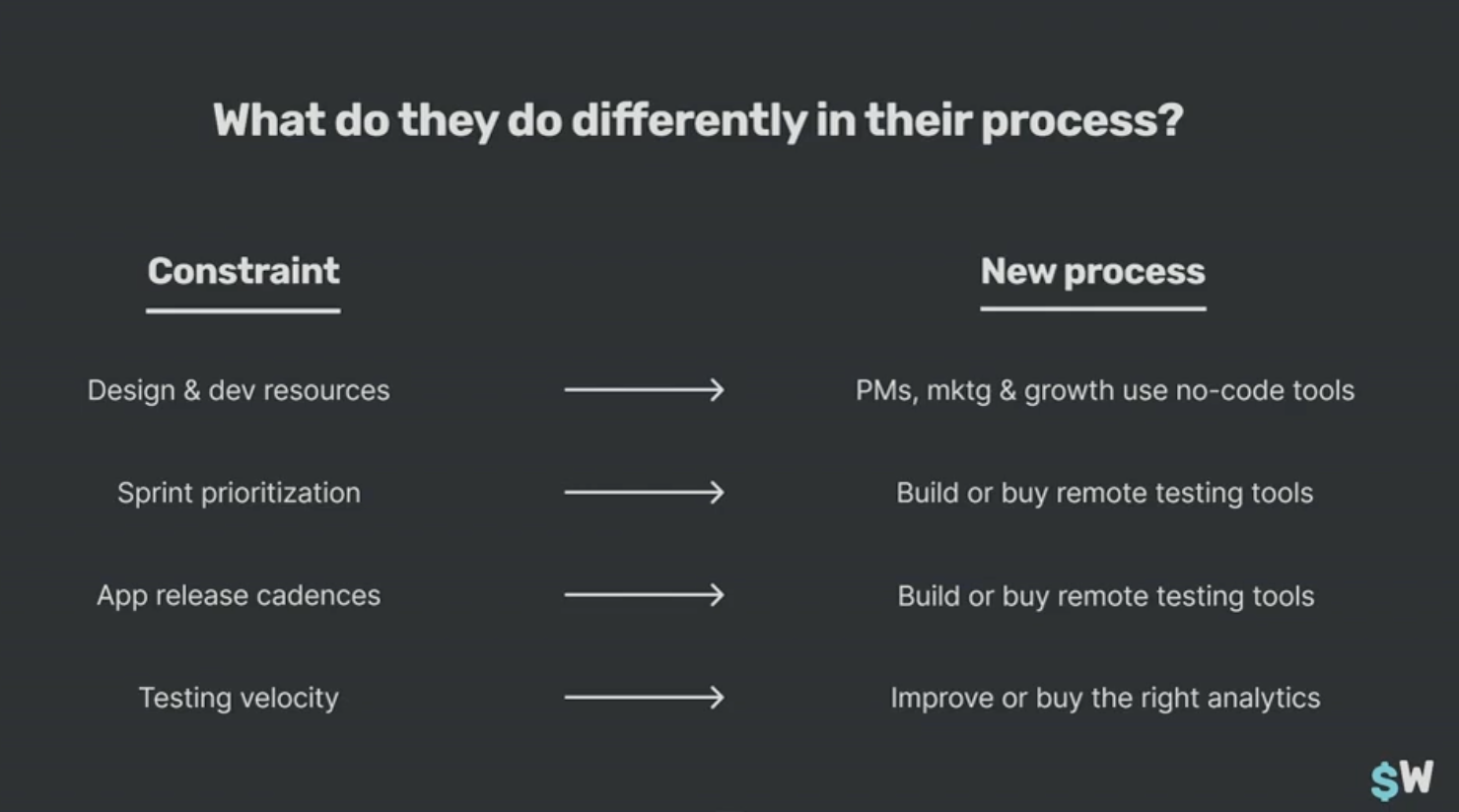
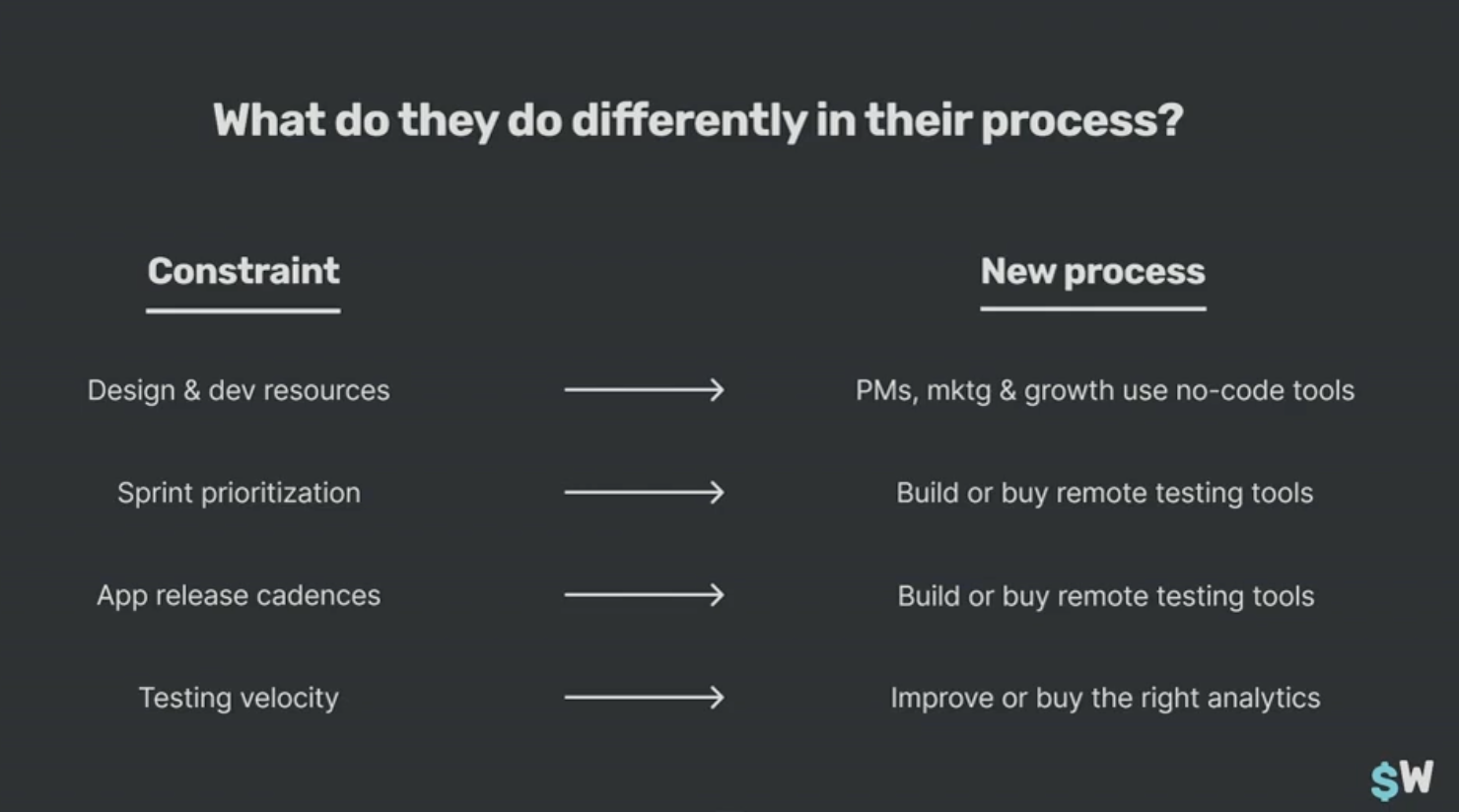
Invest in no-code testing tools and advanced analytics to enable non-technical team members to run growth experiments independently. This removes development bottlenecks and allows testing at the speed of user acquisition rather than engineering sprints.

"Use no-code tools that allow PMs, marketing and growth people to run tests to get around sprint prioritization or apply cadences. They buy or build testing tools and to increase the testing velocity. They improve or buy the right analytics, to your point. Things that allow you to predict and accurately measure the right KPIs to be able to run experiments at scale at the speed of your user volume, not your dev resources."

The Secret to App Conversion at 3:43 · Featured in Growth Gems #133

Sylvain's take:

Of course this plays into Superwall’s narrative. Still, tools that enable rapid experimentation and empower the growth team can be very powerful.
Onboarding and Activation

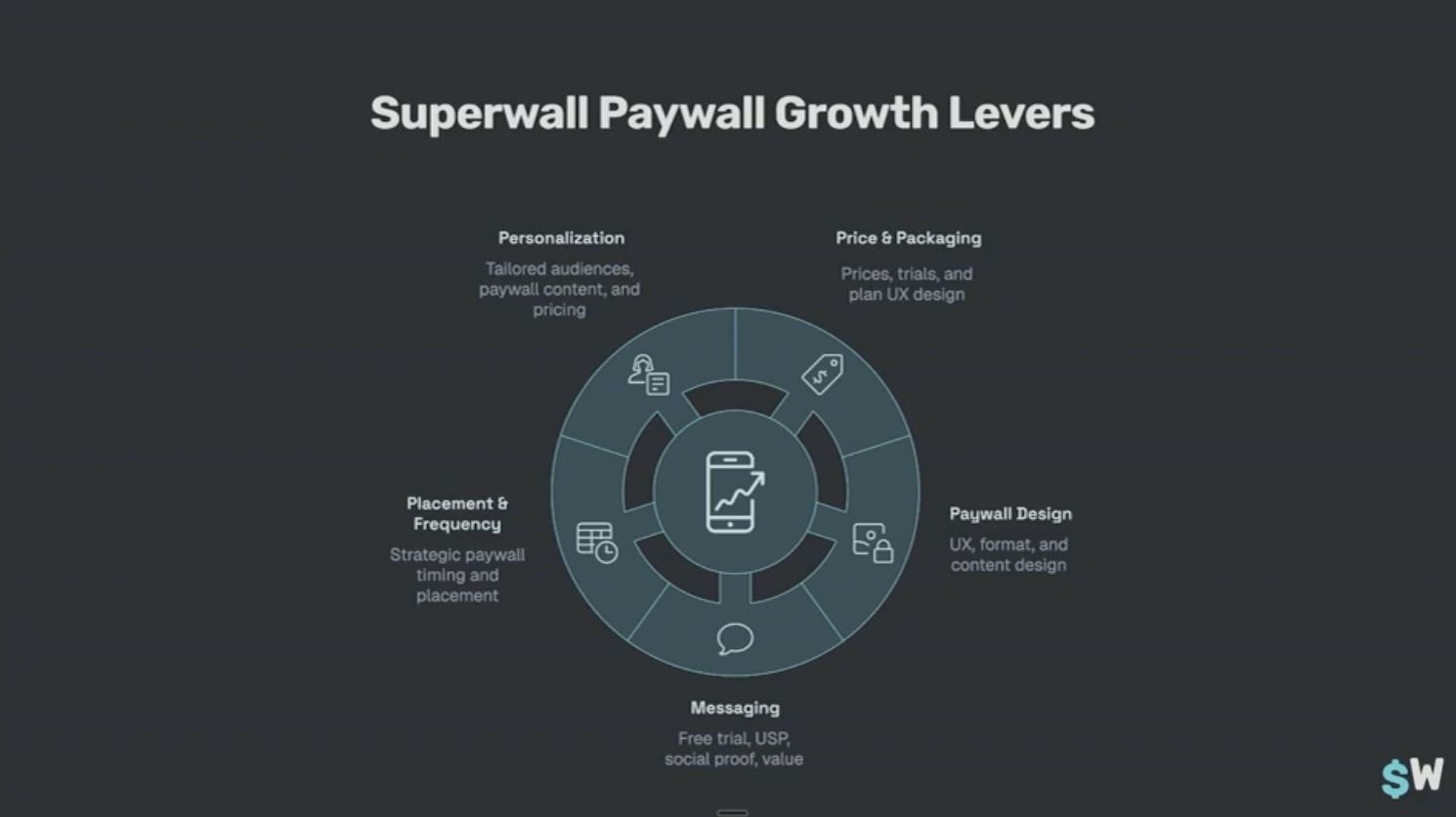
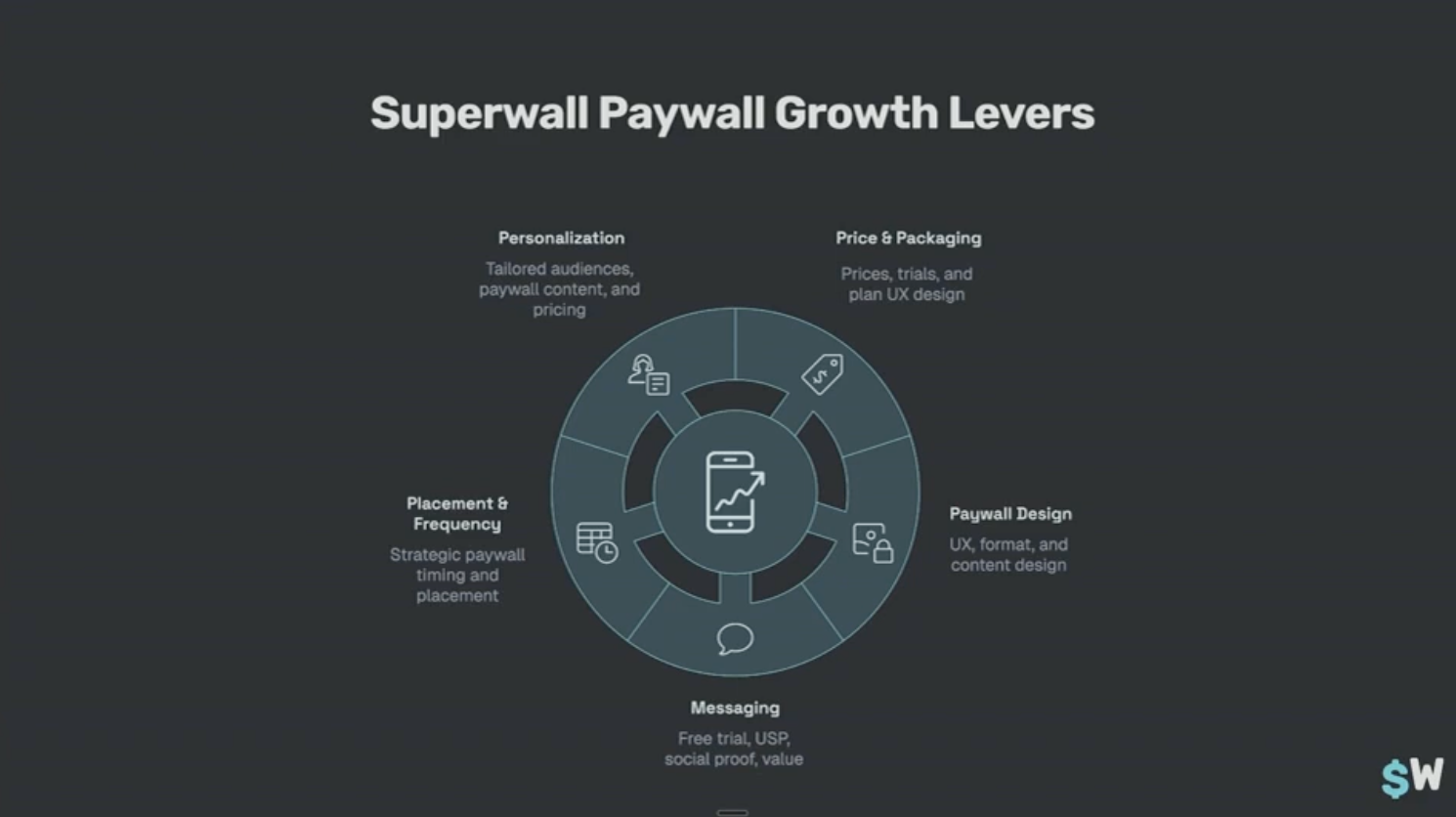
Use a growth lever framework to categorize your tests (pricing, design, messaging, placement, frequency, personalization) and avoid testing across multiple categories simultaneously. This ensures you can isolate what's driving performance improvements.

"At Superwall, we built this framework that we use to basically bundle types of growth tests into different categories. The way I work with customers, is I rarely blend multiple categories at once. Pricing and packaging, payroll design, messaging, placement, frequency, and personalization fit into separate categories, and you rarely ever want to test across these in the same paywall variant."

The Secret to App Conversion at 5:03 · Featured in Growth Gems #133

Sylvain's take:

I like this. A good way to diversify your bets when planning your paywall tests.

I’ll add that it’s rare for onboarding experiments NOT to impact paywall conversion and revenue...So you need to take that into account as well.
Data

Data

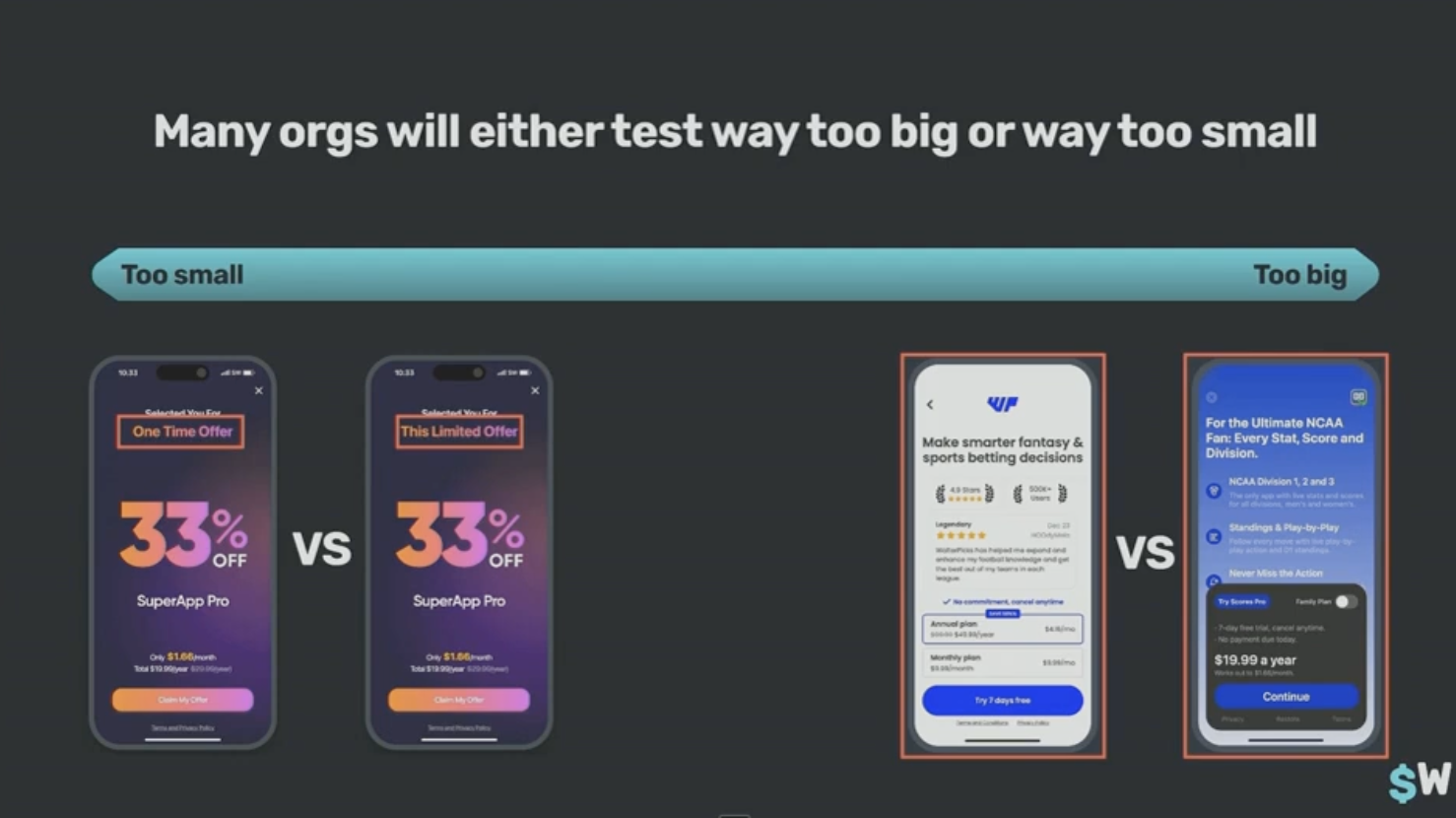
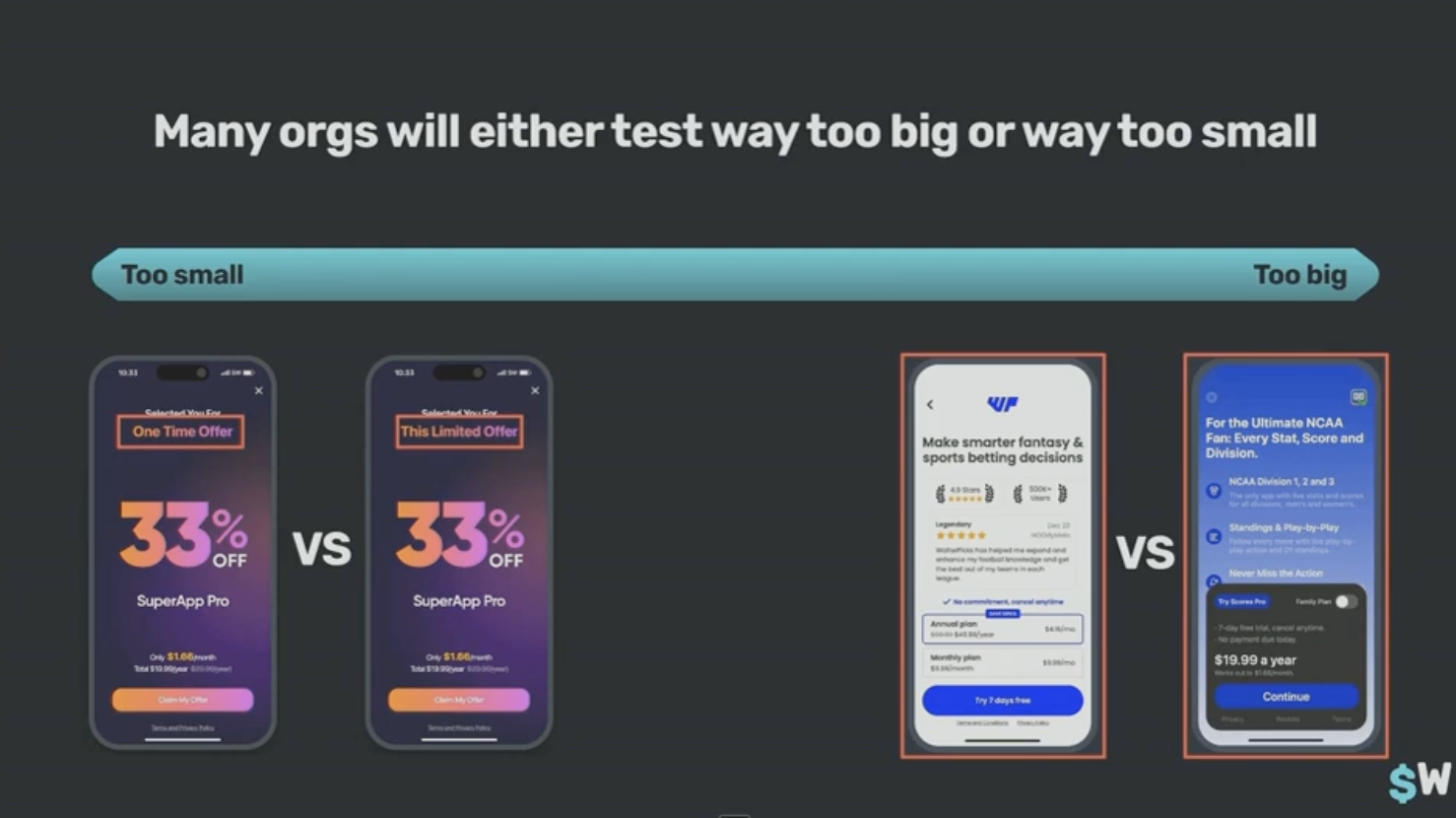
Find the 'variable sweet spot' in your growth testing by avoiding tests that are too small (taking months for significance) or too big (making it impossible to identify what drove results). Focus on testing one meaningful change category at a time.

"Most orgs will either go way too small in their testing or way too big. The reality is, you want to be right in the middle. For example, this test could end up taking you three months to figure out anything statistically significant. It's way too small, whereas in this experiment comparing these two, these are totally different design concepts, totally different content with totally different pricing, but I see apps do this all the time where they're like, 'We tested this new variant and it's working better.' I'm like, 'Cool. What about it's working better?' And you can't tell when your test's too big."

The Secret to App Conversion at 4:16 · Featured in Growth Gems #133

Sylvain's take: