
Growth Gems experts

Yeva Koldovska

· LinkedIn

9 insights on Onboarding and Activation and Monetization from one talk or podcast, each with the quote and a link to the moment it was said.

Is this you? Suggest an edit

Onboarding and Activation

Onboarding and Activation

The web funnel tends to be longer and more sales-oriented because more persuasion is needed. A main reason is that on the web, users need to input their card details which is a higher commitment (and typically leads to lower conversion rates).

Unlocking growth and diversification: the power of web and in-app subscriptions. at 6:30 · Featured in Growth Gems #96

Sylvain's take:

It’s not fair to compare the conversion rate on the web (e.g., ‘visit → purchase’) to the one in the app (‘install → subscription’) because the app store listing does a lot of the “filtering”. Product page views do not account for search results impressions, so ‘impressions → subscription’ might be a better comparison (although not perfect).

Back to the web flow and how it differs from the app flow…

Yeva shared that the questions asked might differ, and because of the longer funnel, you can better connect with customers and build multiple customized flows.

How much longer is the web flow in Headway’s case, you ask? See below.
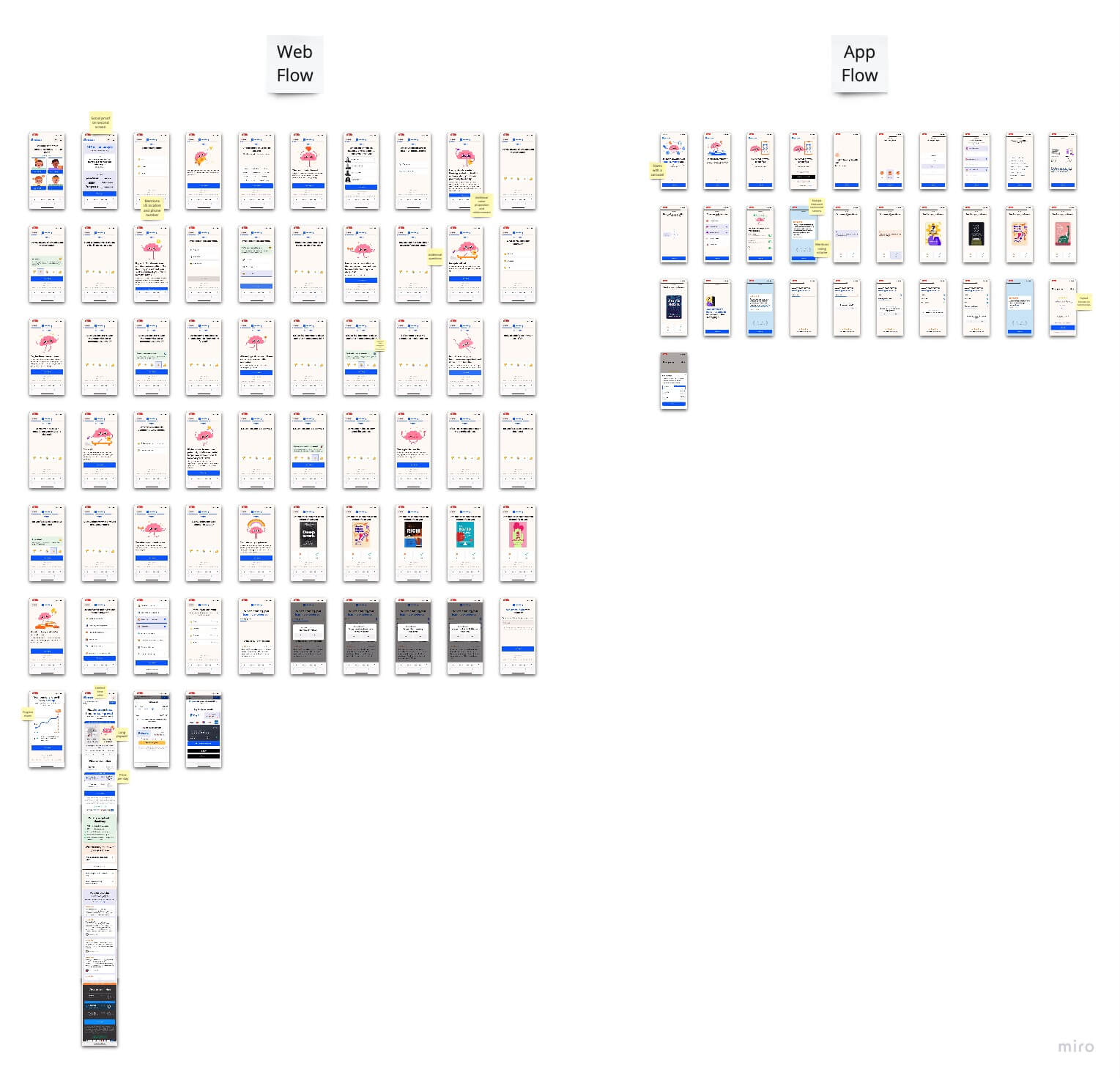
This is not just a specificity of Headway, so check out some other apps’ funnels.

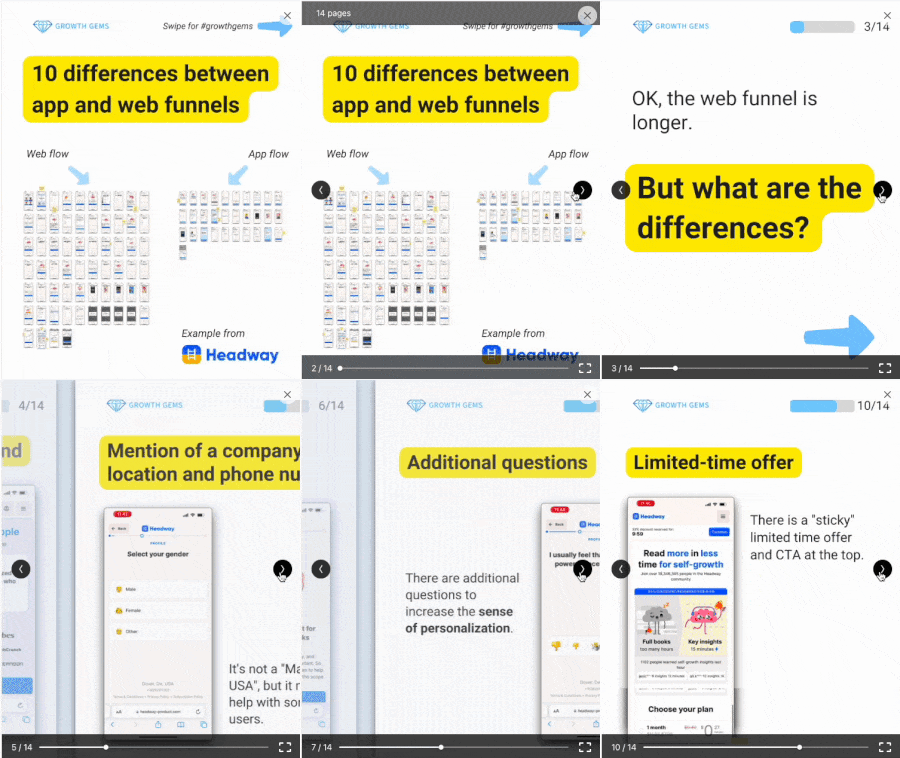
Now, let’s play the “10 differences” game 🔍

I don’t have room for that many visuals, but you can see what I spotted here.
See on LinkedIn

Onboarding and Activation

On the web, you are not tied to app releases so you can do quicker A/B testing and bug testing. Adding a web flow also increases your A/B testing capacities overall: you can carry tests and learnings from one platform to the other.

Unlocking growth and diversification: the power of web and in-app subscriptions. · Featured in Growth Gems #96

Sylvain's take:

I wouldn’t carry results automatically from one platform to the other, as you can’t guarantee things will translate.

However, instead of testing brand new hypotheses on each platform, you can A/B test wherever it is faster and only test what worked on the other platforms (plus any platform-specific hypotheses).

Onboarding and Activation

A web flow allows you to diversify and unlock audiences, UA channels, and revenue streams. It is also a way to mitigate the impact of iOS 14.5 and be less reliant on the app stores.

Unlocking growth and diversification: the power of web and in-app subscriptions. · Featured in Growth Gems #96

Sylvain's take:

Implementing web to app doesn’t mean you completely stop running app campaigns, and it can be done gradually: you can first test it on specific channel(s) (e.g., Meta and web-specific channels).

You’ll notice that many companies still push users to download their apps from their websites’ homepages. This totally makes sense when the focus is to get users on the app because it makes them more valuable (e.g., an eCommerce brand), but in a lot of cases it’s because they haven’t nailed how to convert on the web.

Many also run both Google web search ads and app install ads via Google UAC (which has Google search placements).

Monetization

Other

On the web, use limited-time offers to create a sense of urgency, and make sure you respect the “logic” of the limited offer (it needs to be real). Example: discount countdown timer to trigger loss aversion, fear of missing out, and urgency biases.

Unlocking growth and diversification: the power of web and in-app subscriptions. · Featured in Growth Gems #96

Sylvain's take:

Yeva shared that some users are not ready to buy the product at full price and that offering a trial won’t change that.

That’s why limited offers to the yearly plan (without a trial) work well in the app.

On the web, she recommends discounting the first period (e.g., first month, first quarter, first year) to increase your conversion rates (it will lower LTV, so consider the tradeoff and test your way into it).